WhatsApp

DOING ECO
Environmental Protection Equipment Manufacturer

Environmental Protection Equipment Manufacturer
If you have waste solar panels and want to recover glass, silicon, aluminum, copper and other metals, the right solar panel recycling process depends mainly on the panel structure, processing volume and the form of recovered materials you want to sell.
For most crystalline-silicon PV panels, the recycling process can be based on physical separation or thermal delamination. A typical solar panel recycling process may include panel dismantling, glass removal, crushing, screening and material separation. For larger projects or double-glass modules, thermal treatment can also be considered to separate the bonded layers more effectively.
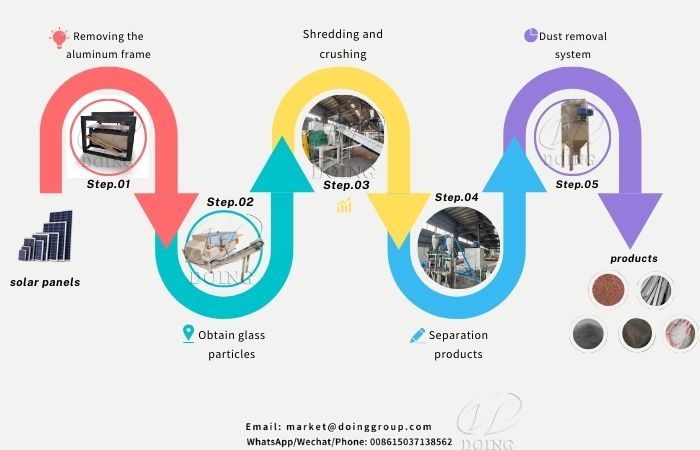 Solar panels processed into recyclable materials
DOING ECO provides three types of solar panel recycling equipment: semi-automatic mechanical recycling, fully automatic mechanical recycling, and tunnel-furnace pyrolysis. The three options allow the equipment configuration to be matched to different panel structures, capacities and recovery requirements.
1. Mechanical Solar Panel Recycling for Glass, Silicon and Metals
For customers mainly looking to recover bulk materials such as glass, aluminum, silicon-containing material and metals, mechanical recycling is a practical option.
The process typically starts with removing the aluminum frame and junction box, followed by glass separation, crushing, screening and material separation. Depending on the equipment configuration, gravity and electrostatic separation can further separate different material fractions.
The main recovered materials can include:
Glass
Aluminum
Copper and other metals
Silicon-containing material
Plastic fractions
This dry physical process does not require chemical treatment, making the system relatively straightforward to operate and suitable for conventional crystalline-silicon solar panels.
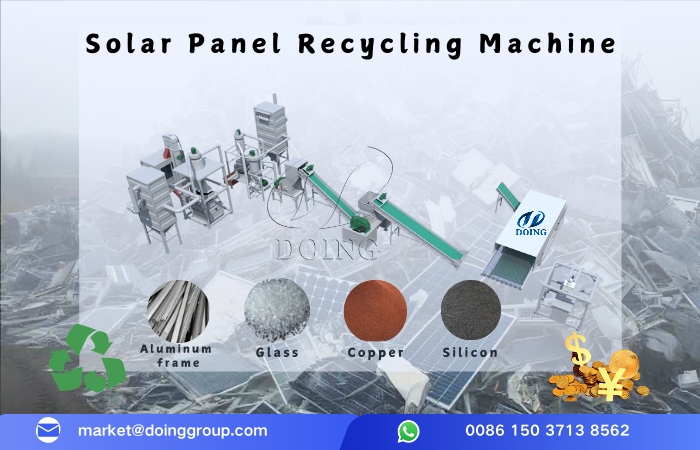 Mechanical recycling equipment and recovered products
Semi-Automatic Recycling Line
A semi-automatic line is suitable for customers who want a simpler system and lower initial investment. It is mainly designed for single-glass PV panels and uses mechanical processing to separate valuable material fractions.
This option can be a good fit for recyclers starting a new business or handling a moderate volume of waste panels.
Fully Automatic Recycling Line
For larger processing requirements, a fully automatic line can reduce manual operations and improve production efficiency.
DOING ECO's fully automatic solar panel recycling equipment can process around 1,000 kg/h, or approximately 55–60 panels per hour, depending on the panel size and feedstock. Automated mechanical configurations can also be designed for capacities above 700–900 kg/h.
Both mechanical options use a physical solar panel recycling process and can be configured around the customer's target output and automation requirements.
2. Tunnel-Furnace Pyrolysis for Double-Glass Panels and Component Recovery
Mechanical recycling is not the only option when the priority is separating the different layers of a PV module.
Solar panels contain encapsulant materials such as EVA that bond the glass, cells and other components together. Solar panel pyrolysis uses controlled thermal treatment to break down these organic layers, making it easier to separate the components.
This approach is particularly relevant when the feedstock includes double-glass solar panels or when the customer places greater value on recovering relatively intact components rather than producing mainly crushed material fractions.
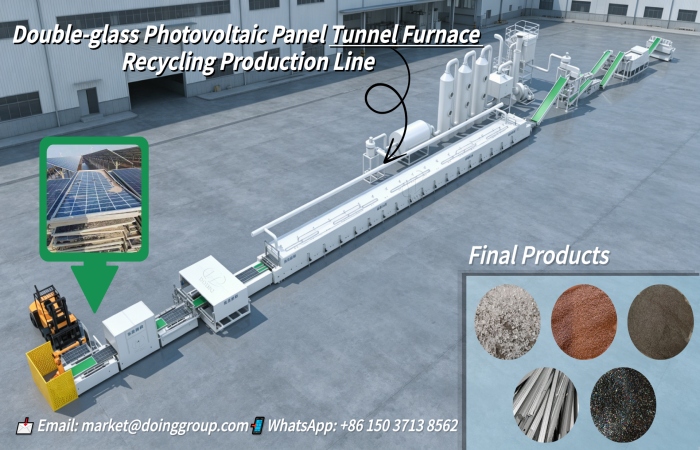 Tunnel furnace pyrolysis and recovered products
A tunnel-furnace system can process both single-glass and double-glass PV panels. Depending on the feedstock and line configuration, recovered products can include:
Whole glass
Silicon wafers or cells
Metal ribbons
Other recyclable components
For projects with an annual processing volume of more than 10,000 tons, a continuous tunnel-furnace solution can be considered as a large-scale thermal recycling option.
3. How to Choose the Right Solar Panel Recycling Equipment
The simplest way to select a solar panel recycling machine is to start with three questions: What panels do you have? How much do you need to process? What materials do you want to recover?
| Project requirement | Suitable solution |
| Single-glass crystalline-silicon panels + bulk material recovery | Semi-automatic or fully automatic mechanical line |
| Single-glass panels + higher automation and capacity | Fully automatic mechanical line |
| Single-glass and double-glass panels + intact component recovery | Tunnel-furnace pyrolysis line |
| Annual processing above 10,000 tons | Continuous tunnel-furnace solution |
For example, if your waste stream mainly consists of single-glass monocrystalline panels and your priority is recovering glass, aluminum, silicon-containing material and metals, a mechanical line can provide a straightforward recycling route.
If you have a large proportion of double-glass panels and want to recover whole glass, silicon wafers and ribbons, a tunnel-furnace solution may be more appropriate.
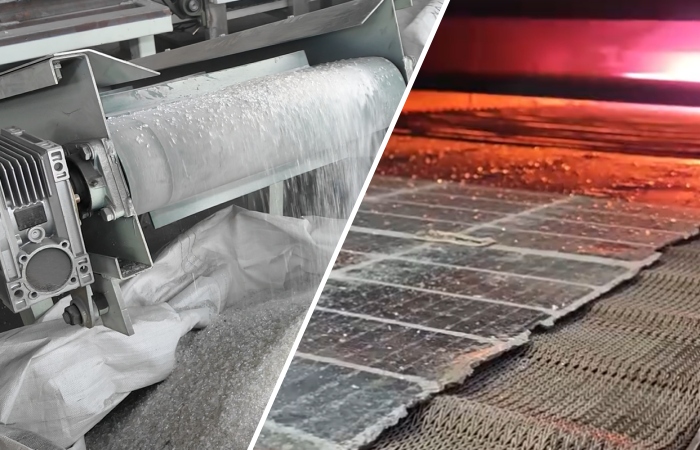 Mechanical recycling and tunnel furnace options
The solar panel recycling equipment should also be selected according to your actual feedstock, because panel construction, contamination, moisture, capacity and target product specifications can all affect the final solar panel recycling process.
Why Choose DOING ECO for Your Solar Panel Recycling Project?
Rather than offering one fixed recycling line for every project, DOING ECO provides semi-automatic, fully automatic and tunnel-furnace PV recycling solutions.
This allows the solar panel recycling machine configuration to be matched to the customer's actual requirements, including:
Solar panel type and structure
Single-glass or double-glass modules
Monocrystalline silicon panels
Required processing capacity
Target recovered materials
Desired automation level
Available installation space
The mechanical lines use a dry physical recycling process with stages such as dismantling, crushing, screening and material separation. Dust control and automated control systems can also be integrated into the line.
For larger projects requiring thermal delamination, the tunnel-furnace solution provides another route for processing single-glass and double-glass PV panels and recovering relatively intact components.
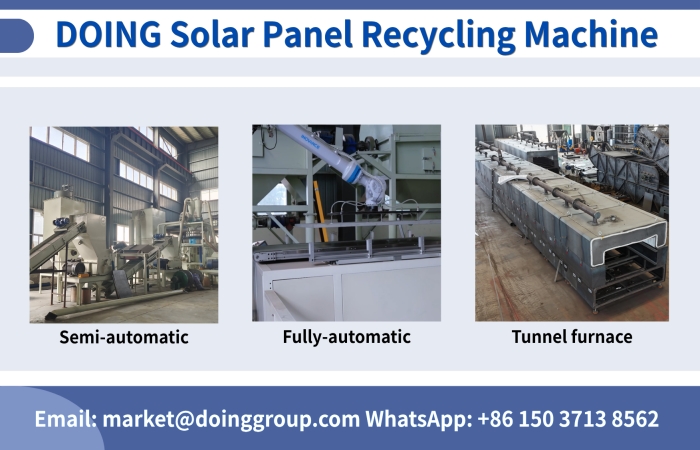 Three PV recycling solutions from DOING ECO
If you already have a waste solar panel supply, send DOING ECO the panel type, approximate monthly or annual volume, and your target recovered materials. The engineering team can recommend a suitable solar panel recycling process and equipment configuration based on your actual feedstock.
FAQs
1. What materials can be recovered from waste solar panels?
Common recoverable materials include glass, aluminum, copper, silicon-containing materials and plastics. Depending on the recycling process, whole glass, silicon wafers and metal ribbons can also be recovered.
2. Can one recycling line process both single-glass and double-glass panels?
It depends on the equipment configuration. DOING ECO's tunnel-furnace solution can be designed for both single-glass and double-glass PV panels, while mechanical configurations are mainly suited to specific panel structures.
3. Is chemical treatment required for solar panel recycling?
No. DOING ECO's mechanical PV recycling lines use a dry physical process without chemical treatment. Thermal treatment is used in the tunnel-furnace solution when pyrolysis is selected.
4. What capacity can a solar panel recycling machine handle?
DOING ECO offers different configurations according to project scale. Fully automatic mechanical lines can process around 1,000 kg/h, while larger projects with annual volumes above 10,000 tons can consider a continuous tunnel-furnace solution.
5. What information should I provide when requesting solar panel recycling equipment?
The most useful information includes your panel type, single- or double-glass structure, estimated waste volume, required processing capacity and the materials you want to recover. These details help determine the appropriate process and equipment configuration.
 What's Better for End-of-Life Solar Panels: Mechanical Recycling or Pyrolysis?
How to make charcoal briquettes from agricultural waste?
Why Is It Not Recommended To Mix Different Types Of Lithium Batteries Together For Recycling?
Which countries offer policy support for the solar panel recycling business?
How The EU Battery Regulation Impacts Lithium Battery Recycling Startups?
What is the most environmentally friendly way to dispose of batteries?
What's Better for End-of-Life Solar Panels: Mechanical Recycling or Pyrolysis?
How to make charcoal briquettes from agricultural waste?
Why Is It Not Recommended To Mix Different Types Of Lithium Batteries Together For Recycling?
Which countries offer policy support for the solar panel recycling business?
How The EU Battery Regulation Impacts Lithium Battery Recycling Startups?
What is the most environmentally friendly way to dispose of batteries?