WhatsApp

DOING ECO
Environmental Protection Equipment Manufacturer

Environmental Protection Equipment Manufacturer
Dry physical separation is suitable for the mechanical separation stage of lithium-ion battery recycling when the goal is to recover black mass and separate valuable metal fractions from processed battery materials.
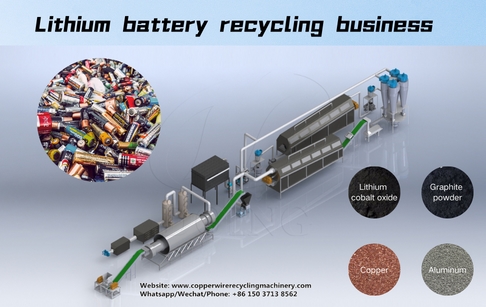
A typical dry lithium battery recycling line combines crushing, milling, screening and multi-stage physical separation. These processes help separate electrode powder, copper, aluminum, ferrous materials and other fractions for further processing.
Dry physical separation typically combines pretreatment, crushing, screening and multi-stage sorting to recover black mass and separate metal fractions.
1. Battery Discharging: Waste batteries undergo suitable discharge treatment to reduce residual electrical energy and lower the risk of fire during crushing.
2. Crushing and Screening: Batteries are crushed to separate casings and internal components. Screening then classifies the crushed materials by particle size for further separation.
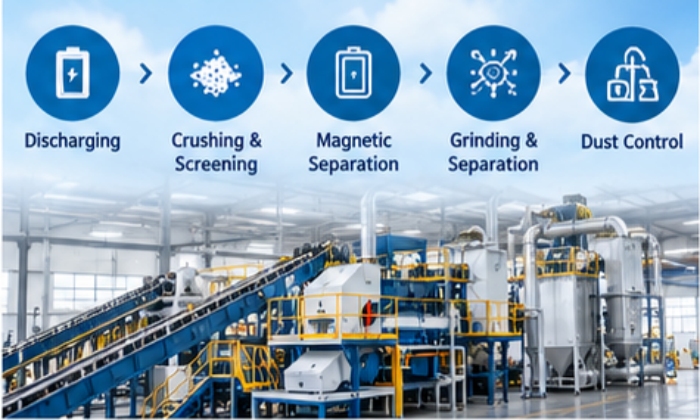 Dry physical recycling process for lithium batteries
3. Magnetic Separation: Magnetic separators recover ferrous metals, while lightweight materials such as separator films can be removed through dedicated air ducts.
4. Grinding and Metal Separation: Further grinding helps liberate copper and aluminum particles. A gravity separator then separates these metal fractions for collection and recycling.
5. Dust and Odor Control: Systems such as pulse dust collectors and other suitable environmental-control equipment help manage dust and process emissions.
These stages work together to support effective black mass recovery and metal separation.
The main purpose of dry physical separation is to produce more clearly separated material streams for further recycling.
Black mass: A powder fraction containing battery electrode materials, potentially including lithium-, nickel-, cobalt- and manganese-bearing compounds, along with graphite and other constituents.
Copper and aluminum: Metal fractions recovered from the battery's current collectors through the appropriate separation stages.
Ferrous metals: Iron-containing components that can be recovered through magnetic separation.
Lightweight materials: Separator films and other lightweight fractions separated through air classification, depending on the feedstock and process design.
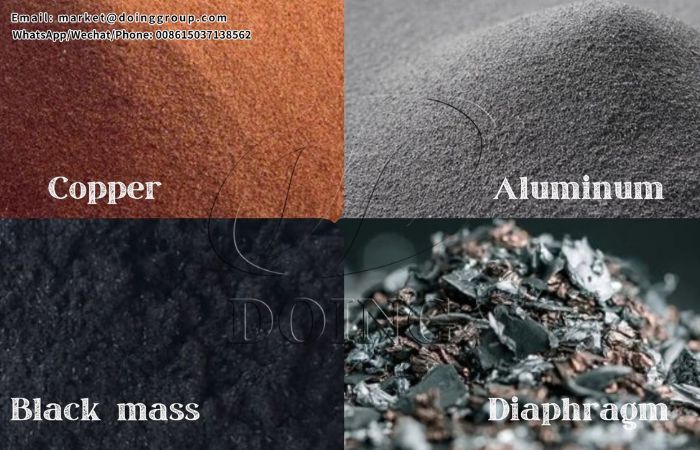 Recycling products from dry physical separation of lithium batteries
The composition of black mass can vary with battery chemistry and processing conditions. The U.S. Environmental Protection Agency also notes that black mass is produced from shredded cathode and anode materials and that its composition can vary by input battery and shredding process.
For this reason, lithium battery recycling machine should be selected according to the required output streams and their intended downstream use, rather than the separation method alone.
DOING ECO (Henan DOING) provides lithium battery recycling machine for end-of-life power batteries and energy storage batteries. Its dry crushing and multi-stage physical separation line combines different processing and sorting units to recover black mass and separate metal fractions.
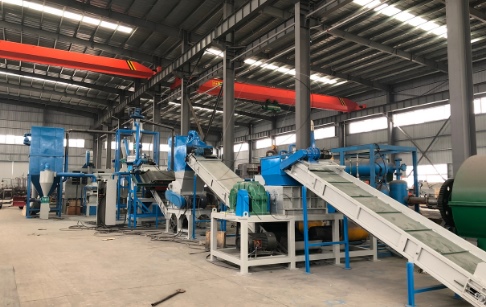
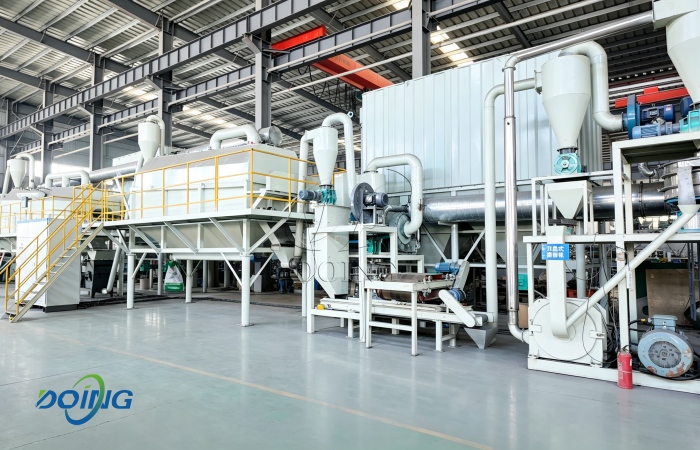 Dry physical lithium battery recycling machine
A PLC control system coordinates the entire recycling line, supporting integrated equipment operation and process management. The system is designed to achieve a metal recovery rate of at least 98% and a separation purity of at least 99%.
To help customers assess the process before making an investment, DOING ECO also provides free feedstock testing and equipment selection support. This gives buyers a practical way to evaluate their incoming battery materials and discuss a suitable recycling solution.
Before selecting lithium battery recycling equipment, buyers should clarify three key points:
1. Battery type and condition: Identify the battery chemistry, incoming form and required pretreatment.
2. Target separated materials: Specify whether the project needs black mass, copper, aluminum or other material fractions.
3. Processing capacity and downstream requirements: Define the planned throughput and the output requirements of subsequent recovery stages.
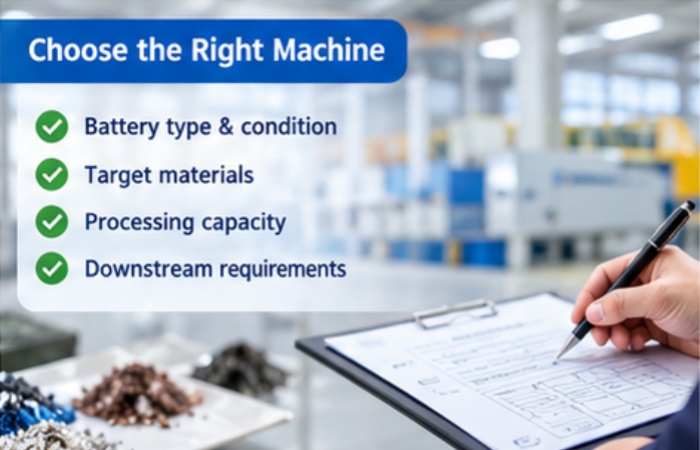 Guide to selecting lithium battery recycling equipment
These details help determine whether a proposed dry physical separation process is suitable and which equipment stages should be included.
Dry physical separation is a practical option for separating black mass, copper, aluminum and other material fractions in suitable lithium-ion battery recycling processes. Its effectiveness depends on the feedstock, separation targets and coordinated equipment configuration. Contact DOING ECO to discuss your project requirements and evaluate a suitable dry lithium battery separation solution.
Yes. Crushing, milling, screening and related separation stages can help liberate and concentrate electrode materials into a black mass fraction. The resulting black mass composition depends on the battery feedstock and processing conditions.
The dry crushing and physical separation stages do not use water as the separation medium. These stages therefore do not generate process wastewater, although dust collection and other site-specific environmental controls remain important.
DOING ECO lithium battery recycling equipment is suitable for LFP, ternary lithium and lithium cobalt oxide batteries, among other types. However, processing parameters may need adjustment for different chemistries. Separate batches and appropriate clearing procedures should be considered rather than mixing different battery chemistries indiscriminately.
No. Dry physical separation concentrates materials into fractions such as black mass and metal fragments. Further metallurgical processing, such as hydrometallurgical treatment where appropriate, is generally required to extract and refine individual metals from black mass.
 Is Dry Physical Separation Suitable for Lithium-Ion Battery Recycling?
Are There Alternatives to Pyrolysis for Recycling Waste Lithium Batteries?
What's Better for End-of-Life Solar Panels: Mechanical Recycling or Pyrolysis?
How to make charcoal briquettes from agricultural waste?
Why Is It Not Recommended To Mix Different Types Of Lithium Batteries Together For Recycling?
Which countries offer policy support for the solar panel recycling business?