
 WhatsApp

DOING ECO
Environmental Protection Equipment Manufacturer
Environmental Protection Equipment Manufacturer
Dry mechanical recycling is a practical alternative to pyrolysis for recovering valuable materials from waste lithium batteries. Instead of relying on high-temperature treatment, it uses crushing, screening, magnetic separation and gravity separation to separate battery components into reusable material fractions.
Among the different lithium-ion battery recycling methods, dry mechanical processing is particularly suitable for businesses that want to recover black mass, copper, aluminum, iron and plastics without making thermal treatment the core of the process.
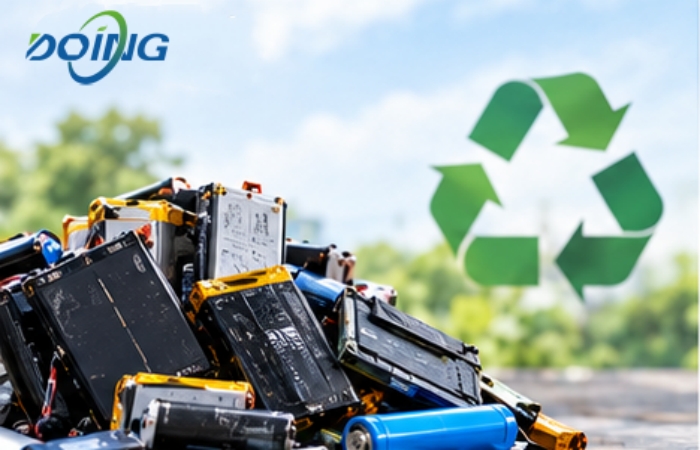 Lithium battery recycling
DOING ECO provides dry mechanical lithium-ion battery recycling equipment designed around different battery types, processing capacities and target products.
Dry mechanical recycling works by reducing battery size and separating materials according to particle size, magnetism, density and other physical properties.
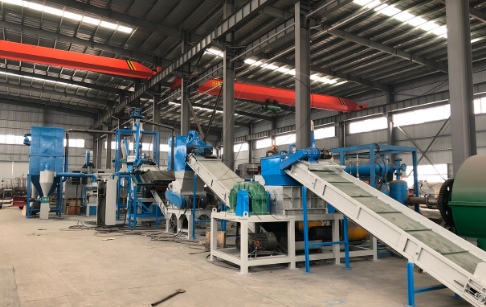
A typical process includes crushing, magnetic separation, screening and gravity separation. These stages separate larger metal and plastic fractions from finer electrode-rich material, which is collected as black mass. Compared with thermal treatment, this approach does not require a pyrolysis furnace as the core processing unit. It can reduce reliance on high-temperature treatment and chemical reagents, simplifying the process for projects focused on physical material recovery.
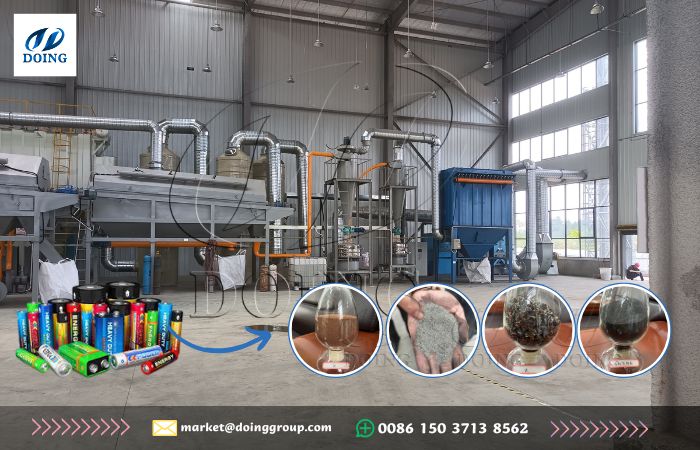 Physical Recycling of Lithium Batteries
However, safe handling remains essential. Waste lithium batteries may contain residual electrical energy, electrolytes and combustible materials, so proper pretreatment, controlled crushing and effective dust collection are important.
Before entering the mechanical recycling line, waste lithium batteries should be properly discharged as a safety-related pretreatment. Discharging is carried out before the DOING ECO recycling line and is not part of the line itself.
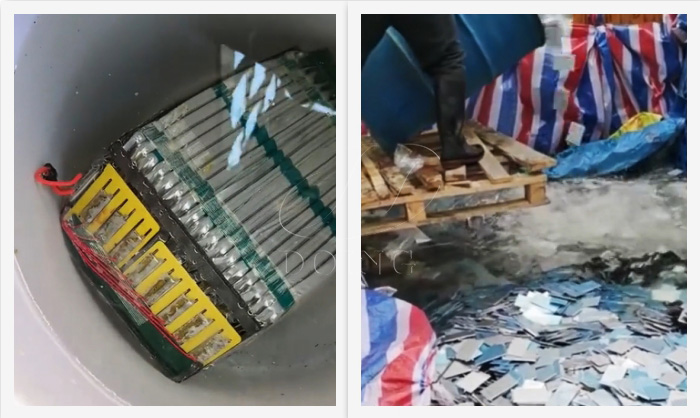 Lithium battery discharge
After discharging, the batteries enter the mechanical recycling process:
Crushing: Reduces battery size and liberates internal components for separation.
Magnetic separation: Removes ferrous materials such as iron-containing components.
Screening: Classifies crushed materials by particle size to separate coarse and fine fractions.
Gravity and physical separation: Separates materials such as copper, aluminum, plastics and electrode-rich fractions.
Black mass collection: Collects fine electrode-rich material for sale or further downstream refining.
DOING ECO’s lithium battery recycling equipment is designed to recover multiple material fractions through dry physical processing, without pyrolysis or chemical leaching as the main separation method.
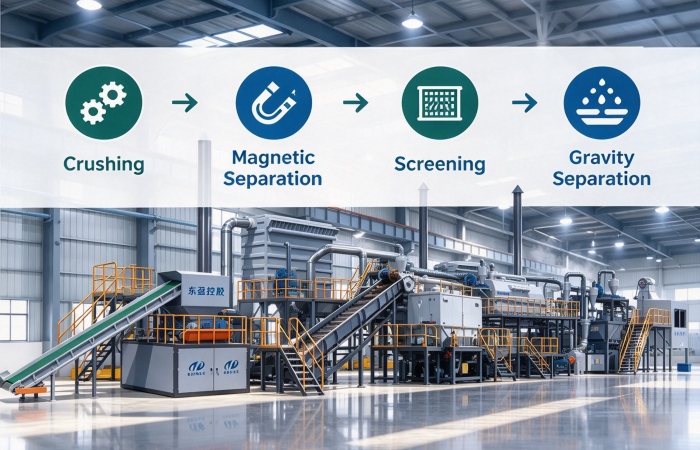 Lithium battery recycling process
For suitable feedstock and a properly configured system, the equipment can achieve a recovery rate of ≥99% and material purity of ≥98%. These figures depend on battery type, feed composition and separation requirements, so material testing is recommended before finalizing the configuration. DOING ECO offers lithium battery recycling solutions with capacities of approximately 500–3,000 kg/h, depending on the feedstock and project requirements.
Depending on the battery type and equipment configuration, dry mechanical recycling can recover several material fractions:
Black mass: Electrode-rich material containing lithium, cobalt, nickel and other battery materials.
Copper: Recovered from copper current collectors and other copper-containing components.
Aluminum: Mainly from current collectors and battery components.
Iron: Separated through magnetic separation.
Plastics: Recovered from battery casings, separators and other plastic components.
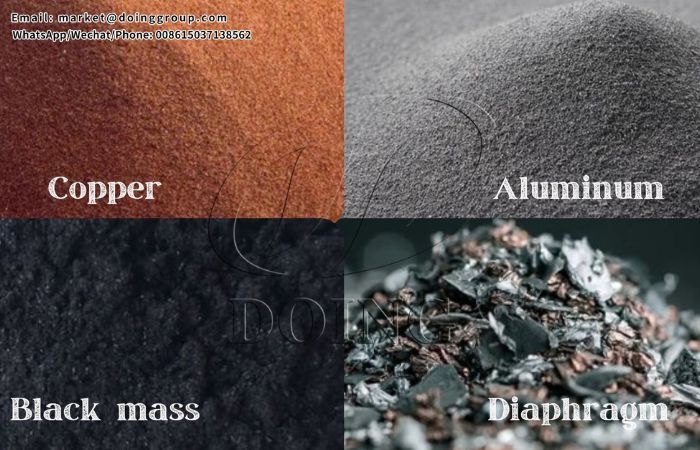 Lithium battery recycling materials
The exact output and product quality depend on the incoming batteries. Production scrap and mixed end-of-life batteries, for example, may require different separation configurations.
Dry mechanical recycling replacing pyrolysis can be a suitable approach when the main goal is physical material separation, reduced reliance on high-temperature treatment and recovery of multiple product streams. It is particularly relevant for recyclers who plan to sell black mass and separated metals to downstream processors rather than refine individual battery metals themselves.
When comparing lithium-ion battery recycling methods, consider the battery types you handle, required processing capacity, target products, recovery expectations and whether downstream refining is part of your business. DOING ECO can evaluate these requirements to recommend a suitable recycling line configuration rather than relying on a one-size-fits-all solution.
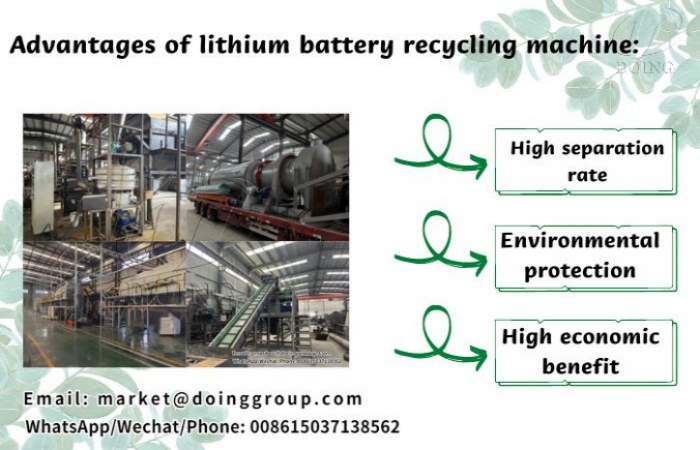 Lithium battery equipment
If you are considering an alternative to pyrolysis, DOING ECO can help assess your feedstock, processing capacity and recovery targets to determine a suitable dry mechanical lithium battery recycling solution.
The main lithium-ion battery recycling methods include mechanical processing, hydrometallurgical treatment and pyrometallurgical treatment. These approaches can also be combined. Mechanical recycling focuses on physical separation, while downstream refining may be needed to recover individual battery metals.
Yes. Dry mechanical recycling uses crushing, screening, magnetic separation and gravity separation to recover material fractions without requiring a pyrolysis furnace as the core processing unit.
Yes. Waste lithium batteries should be properly discharged before entering mechanical recycling equipment as a safety-related pretreatment. This step is separate from DOING ECO’s mechanical recycling line.
No. DOING ECO’s equipment collects black mass containing these valuable materials but does not refine them into individual chemical products. Further downstream processing is required for that purpose.
DOING ECO offers solutions in approximately the 500–3,000 kg/h range. The final configuration depends on the battery type, feedstock composition and target products.
 Are There Alternatives to Pyrolysis for Recycling Waste Lithium Batteries?
What's Better for End-of-Life Solar Panels: Mechanical Recycling or Pyrolysis?
How to make charcoal briquettes from agricultural waste?
Why Is It Not Recommended To Mix Different Types Of Lithium Batteries Together For Recycling?
Which countries offer policy support for the solar panel recycling business?
How The EU Battery Regulation Impacts Lithium Battery Recycling Startups?
Are There Alternatives to Pyrolysis for Recycling Waste Lithium Batteries?
What's Better for End-of-Life Solar Panels: Mechanical Recycling or Pyrolysis?
How to make charcoal briquettes from agricultural waste?
Why Is It Not Recommended To Mix Different Types Of Lithium Batteries Together For Recycling?
Which countries offer policy support for the solar panel recycling business?
How The EU Battery Regulation Impacts Lithium Battery Recycling Startups?