
 WhatsApp

DOING HOLDINGS
Environmental Protection Equipment Manufacturer
Environmental Protection Equipment Manufacturer
When undertaking spent lithium battery recycling projects, many practitioners consider processing collected batteries of different types together to save time during the initial sorting stage. However, from a professional process perspective, mixing different types of lithium batteries for recycling is not recommended. Such a practice not only increases safety risks but also significantly reduces the economic value of the recovered products.
Lithium batteries currently on the market primarily consist of nickel-manganese-cobalt (NMC) batteries and lithium iron phosphate (LFP) batteries. There are significant differences in the metal composition of cathode materials across various types of lithium batteries. NMC batteries contain high-value nickel, cobalt, and manganese, whereas LFP batteries are primarily rich in lithium and iron.
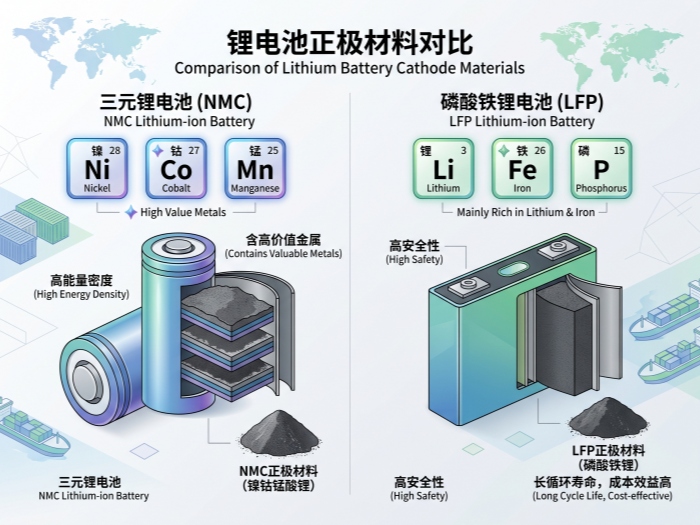 Compositions of different types of lithium batteries
If these batteries are mixed together during the recycling process, the resulting "black mass" (cathode material powder) obtained after crushing and sorting will have a highly heterogeneous composition. Such mixed black mass significantly increases the difficulty and cost of downstream hydrometallurgical purification; it not only impacts the recovery rate of valuable metals but also drives down the market price of the recycled products. Sorting processing batteries by type is essential to ensure the purity of the black mass and thereby achieve higher economic returns.
In addition to their chemical composition, waste lithium batteries vary widely in appearance and physical structure; common types include cylindrical cells, prismatic hard-cased cells, and pouch cells, with casing materials ranging from steel and aluminum to aluminum-plastic film.
During the lithium-ion battery recycling process, parameters such as crushing particle size, magnetic separation intensity, and air classification settings must be determined based on the specific materials and structural of the batteries. Mixed recycling results in inconsistent physical properties within the same batch of material, making it difficult to achieve optimal separation results and compromising the recovery rates of copper and aluminum particles as well as black mass.
Lithium batteries vary in structure and type, differing in terms of internal resistance, electrolyte composition, and the critical thresholds for thermal runaway. Directly feeding mixed different types of lithium batteries into crushing equipment without prior sorting can easily lead to short circuits or localized overheating during operation, thereby increasing the risk of fire. So upstream sorting and discharging processes are crucial for ensuring the safe and stable operation of the entire lithium battery recycling production line.
From a long-term economic benefits, the mixed recycling of lithium batteries may appear to save on upfront sorting costs, but it actually significantly increases the costs of subsequent separation and purification. Therefore, proper initial battery sorting is a crucial step in enhancing the value of lithium battery recycling. For sorted spent lithium batteries, selecting suitable and specialized processing equipment serves as a robust guarantee for the sustainable development of the business.
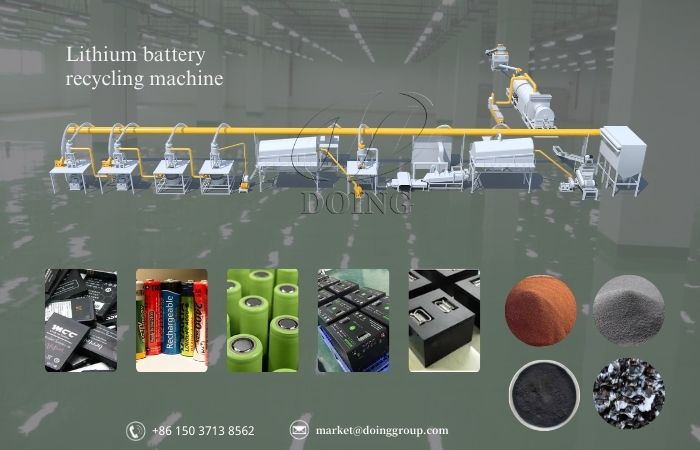 Lithium battery recycling plant
With 15 years of experience as a manufacturer of mechanical equipment, DOING Company utilizes dry physical-mechanical separation technology in the lithium battery recycling plant we develop and manufacture. Our equipment enables efficient, large-scale processing of various sorted waste lithium batteries, including Nickel Manganese Cobalt (NMC) and Lithium Iron Phosphate (LFP) batteries.
Through eco-friendly processes such as multi-stage crushing and sorting, the system effectively separates high-purity black mass, copper and aluminum granules, and battery casing materials. Furthermore, DOING's complete lithium battery recycling system is equipped with comprehensive dust removal and safety protection devices, dedicated to providing customers with safe, environmentally friendly, and efficient solutions for processing waste lithium batteries.
When investing in waste lithium battery processing projects, a combination of scientific material sorting and professional recycling machine is essential to achieving steady growth in commercial returns. If you are looking for reliable lithium battery recycling plant, or have any questions regarding processing techniques or plant layout for spent lithium batteries, please feel free to contact DOING Company.
 What's Better for End-of-Life Solar Panels: Mechanical Recycling or Pyrolysis?
How to make charcoal briquettes from agricultural waste?
Why Is It Not Recommended To Mix Different Types Of Lithium Batteries Together For Recycling?
Which countries offer policy support for the solar panel recycling business?
How The EU Battery Regulation Impacts Lithium Battery Recycling Startups?
What is the most environmentally friendly way to dispose of batteries?
What's Better for End-of-Life Solar Panels: Mechanical Recycling or Pyrolysis?
How to make charcoal briquettes from agricultural waste?
Why Is It Not Recommended To Mix Different Types Of Lithium Batteries Together For Recycling?
Which countries offer policy support for the solar panel recycling business?
How The EU Battery Regulation Impacts Lithium Battery Recycling Startups?
What is the most environmentally friendly way to dispose of batteries?