
 WhatsApp

DOING ECO
Environmental Protection Equipment Manufacturer

Environmental Protection Equipment Manufacturer
As solar power continues to expand worldwide, the number of solar panels reaching the end of their service life is also increasing. Most PV modules are designed to operate for around 25–30 years, and global end-of-life PV waste is expected to grow significantly in the coming decades. At the same time, retired solar panels still contain valuable materials such as glass, aluminum, copper and silicon, making recycling an opportunity to recover resources rather than simply dispose of waste.
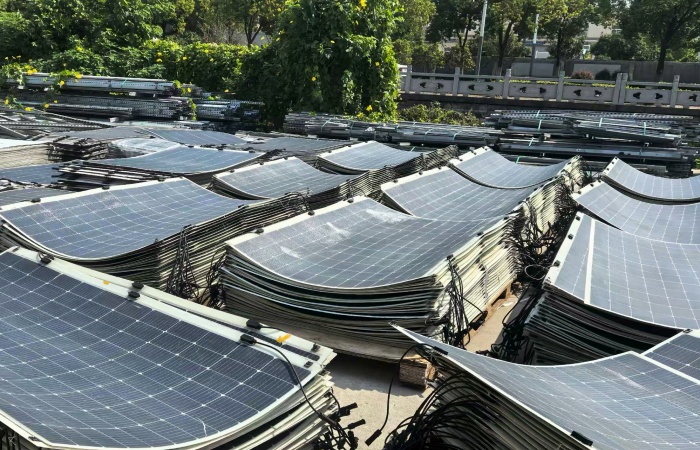 End-of-life solar panels for recycling
For recycling companies, however, profitability depends heavily on how efficiently these materials can be separated and recovered. This makes the choice of a reliable solar panel recycling machine manufacturer particularly important. A good solar panel recycling equipment supplier should not simply offer a machine with a high advertised capacity, but provide a recycling solution that matches the customer's panels, processing volume and required recovered products.
So, which solar panel recycling machine manufacturer is reliable? The following four factors are worth considering.
The first thing to check is whether the supplier can provide a complete PV recycling line rather than just an individual crusher or separator. A complete solution should cover the major stages of recycling, such as frame and J-box removal, glass processing, crushing, screening and physical separation.
The basic process can be summarized as:
PV panel feeding → frame removal → glass treatment → crushing → screening & separation → recovered materials
The configuration should also match the actual PV modules being processed. A manufacturer should be able to clearly explain what types of panels its equipment can handle and which recycling technology is suitable for them.
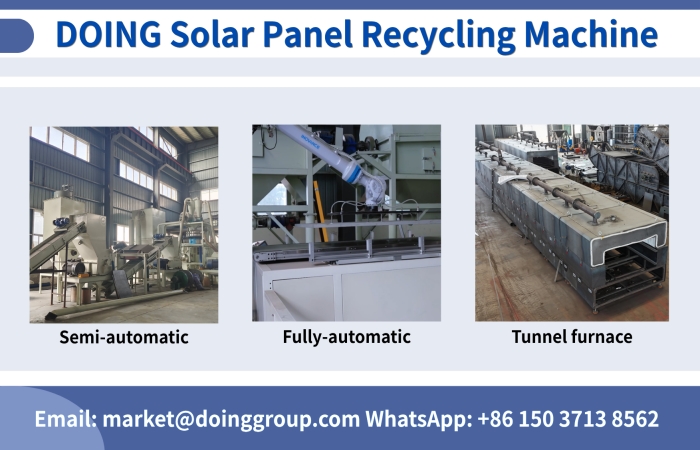 Three solar panel recycling lines from DOING ECO
This is where DOING ECO (HENAN DOING Holding) offers several options rather than a single standard machine. The company provides three complete PV recycling solutions: semi-automatic, fully automatic and tunnel furnace lines. The semi-automatic line is mainly designed for single-glass crystalline-silicon panels and uses multi-stage mechanical crushing and physical separation. The fully automatic line follows a similar mechanical recycling route with a higher degree of automation. For projects involving both single-glass and double-glass panels, the tunnel furnace line uses thermal treatment to separate the laminated structure and recover valuable materials such as silicon, intact glass and busbars.
By offering different complete-line configurations, DOING ECO can provide PV recycling equipment according to the customer's panel type, processing requirements and desired production scale.
Processing capacity is important, but panels per hour or tons per hour should not be evaluated alone. Actual throughput can vary depending on panel size, structure, glass thickness, feeding method and the configuration of the complete line.
More importantly, buyers should look at what comes out of the recycling process. A reliable manufacturer should be able to provide realistic information about the recovery rate, material purity and final recovered products, including glass, aluminum, copper and silicon. Testing the customer's own waste panels is also more meaningful than relying only on figures in a product brochure.
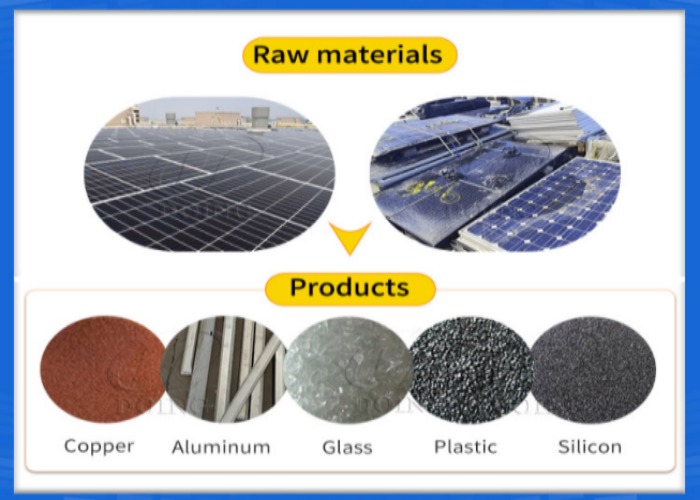 Recovered glass, aluminum, copper and silicon
For its PV recycling solutions, DOING ECO's equipment can achieve a material recovery rate of ≥98% and recovered material purity of up to ≥99%, depending on the feedstock and final material requirements. The company can also customize the line according to the customer's panel type, required processing capacity and target recovered products, helping ensure that the equipment is designed around the actual recycling project rather than a generic capacity figure.
For a commercial recycling plant, automation directly affects labor requirements, production consistency and operating efficiency. Buyers should therefore consider whether the equipment uses centralized control, how much manual operation is required and whether the system can be expanded or adjusted as the project grows.
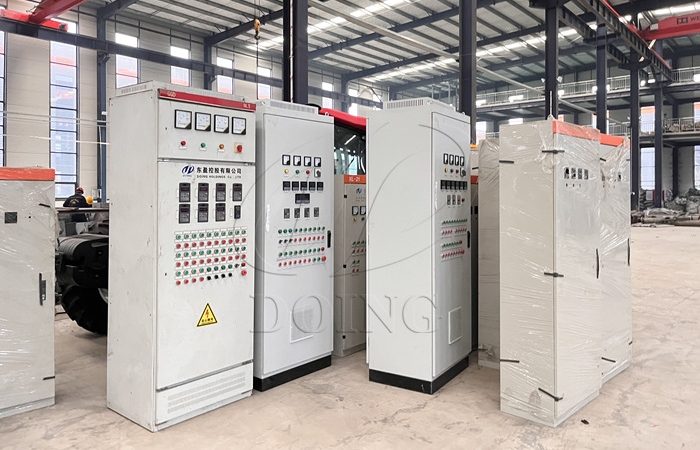 PLC control system for automated PV recycling equipment
DOING ECO's PV recycling equipment uses a PLC control system to coordinate the main processing stages, allowing a higher level of automation and more stable operation while reducing the amount of manual labor required. At the same time, environmental performance should not be overlooked. Dust can be generated during crushing and screening, so the equipment can be equipped with pulse dust collectors and other dust-control systems to reduce airborne particles and provide a cleaner working environment. Energy consumption, fire protection and local environmental requirements can also be considered during the overall line design.
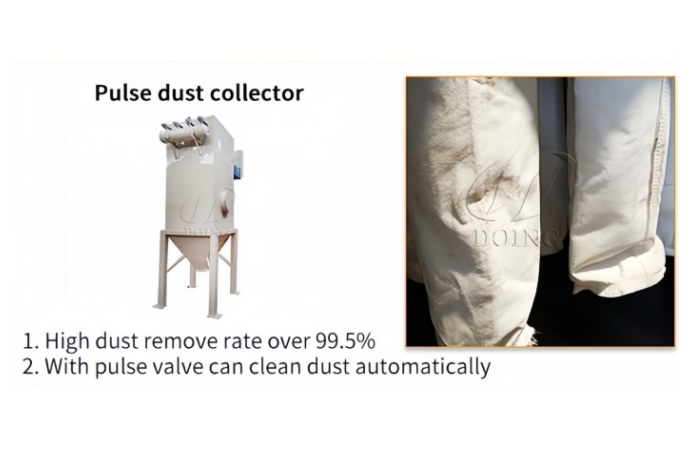 Pulse dust collection system for PV recycling equipment
Before purchasing a solar panel recycling line, it is worth asking the manufacturer to demonstrate that the proposed technology works with your actual feedstock. Useful verification points include:
| What to verify | Why it matters |
| Actual panel testing | Confirms compatibility with your feedstock |
| Capacity test | Shows realistic panels/hour or tons/hour performance |
| Recovery rate & purity | Helps evaluate the value of recovered materials |
| Running projects | Provides evidence of practical equipment performance |
| Quality & compliance certificates | Provides additional evidence of the manufacturer's quality management and equipment compliance |
| Installation & technical support | Helps ensure reliable long-term operation |
A reliable manufacturer should be able to support more than the equipment purchase itself. DOING ECO (Henan Doing Environmental Protection Technology Co., Ltd.) has obtained ISO 9001:2015 quality management system certification and Machinery Directive conformity documentation, providing additional evidence of its quality management practices and commitment to equipment compliance. DOING Company has an engineering and technical team of over 40 people and has been granted more than 49 patents since 2026, including sorting equipment that facilitates higher recycling rates for photovoltaic panels (patent number: ZL 2022 2 1922829.3). In addition, the company provides project-based services covering process design, complete-line configuration, equipment manufacturing, installation, commissioning and technical support, supported by a professional engineering team with experience serving overseas recycling projects.
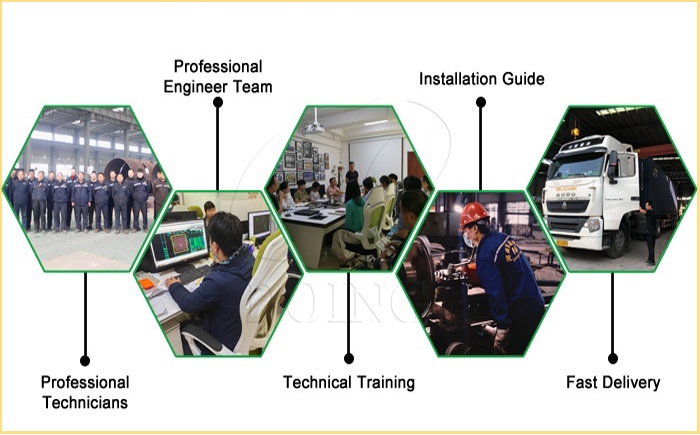 DOING ECO engineering team for PV recycling projects
For a PV recycling project, these qualifications should be considered together with actual equipment testing and project verification. Certificates show that a manufacturer has established quality and compliance systems, while real tests and project experience help verify whether the proposed recycling line can meet the customer's specific requirements. This is an important consideration when comparing a solar panel recycling equipment supplier with other manufacturers.
A reliable solar panel recycling machine manufacturer should provide a suitable recycling technology, realistic processing capacity, high recovery and purity, appropriate automation and environmental controls, as well as testing and technical support throughout the project.
For companies planning a PV recycling project, the best starting point is to provide the manufacturer with information about the type and quantity of waste solar panels available, expected processing capacity and target recovered products. The supplier can then recommend a suitable recycling process and equipment configuration.
If you are evaluating solar panel recycling equipment for crystalline-silicon, single-glass or double-glass PV panels, DOING ECO can provide semi-automatic, fully automatic and tunnel furnace recycling solutions and customize the complete line according to your project requirements. Contact DOING ECO, a solar panel recycling equipment supplier and manufacturer, to discuss your PV recycling project, processing capacity and suitable equipment configuration. Besides, DOING ECO's manufacturing factory currently has a prototype of solar panel recycling equipment, which supports third-party factory inspections, and visitors will come to the factory to tour and test the equipment.
 Is Dry Physical Separation Suitable for Lithium-Ion Battery Recycling?
Are There Alternatives to Pyrolysis for Recycling Waste Lithium Batteries?
What's Better for End-of-Life Solar Panels: Mechanical Recycling or Pyrolysis?
How to make charcoal briquettes from agricultural waste?
Why Is It Not Recommended To Mix Different Types Of Lithium Batteries Together For Recycling?
Which countries offer policy support for the solar panel recycling business?
Is Dry Physical Separation Suitable for Lithium-Ion Battery Recycling?
Are There Alternatives to Pyrolysis for Recycling Waste Lithium Batteries?
What's Better for End-of-Life Solar Panels: Mechanical Recycling or Pyrolysis?
How to make charcoal briquettes from agricultural waste?
Why Is It Not Recommended To Mix Different Types Of Lithium Batteries Together For Recycling?
Which countries offer policy support for the solar panel recycling business?