WhatsApp

DOING ECO
Environmental Protection Equipment Manufacturer

Environmental Protection Equipment Manufacturer
Choosing a reliable lithium battery recycling machine manufacturer is about more than comparing equipment prices. A reliable supplier should have proven recycling technology, suitable processing capacity, effective safety measures, practical project experience, and the engineering support needed to keep a recycling plant running.
Henan Doing Environmental Protection Technology Co., Ltd. (abbreviated as DOING ECO) is one option for businesses looking for a commercial lithium battery recycling solution. Based on more than 15 years of experience in the R&D, manufacturing, and installation of waste recycling equipment, DOING ECO designs and supplies dry mechanical lithium battery recycling machines for spent lithium-ion batteries and battery production waste. Equipment configurations can be adjusted according to battery type, feedstock condition, required capacity, available factory space, and target recovered materials.
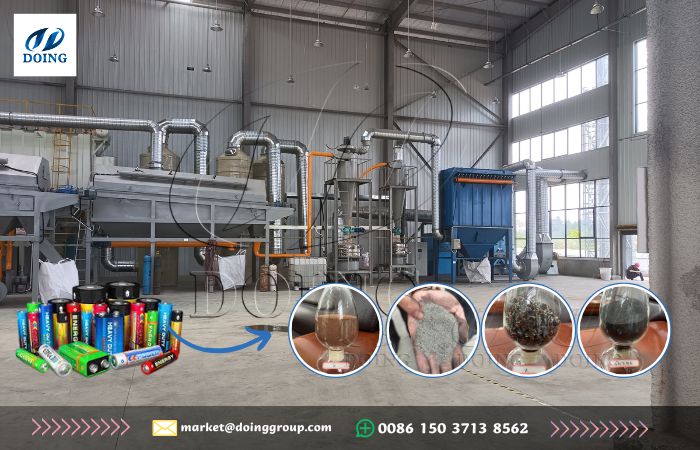 DOING lithium battery recycling machine
There is no single specification that can determine whether a lithium battery recycling machine manufacturer is reliable. A better approach is to compare suppliers across several technical and commercial factors before making a decision.
The following checklist provides a practical starting point:
| Factor | What buyers should check |
| Recycling technology | Crushing, screening, and physical separation process |
| Material recovery | Recovery efficiency and purity of separated products |
| Processing capacity | Whether the line matches the available battery waste |
| Safety | Battery pretreatment, dust control, gas handling, and emergency measures |
| Cost-effectiveness | Investment, energy, labor, maintenance, and material recovery |
| Turnkey capability | Process design, equipment manufacturing, installation, and commissioning |
| Project experience | Similar projects, customer applications, and operating results |
| Technical support | Training, troubleshooting, spare parts, and after-sales service |
This checklist gives buyers a practical way to compare different suppliers on the same technical and commercial basis. The following sections explain what to look for in each area and how these factors can affect the long-term operation of a recycling plant.
The first thing to check is how the manufacturer handles and separates the different materials contained in spent lithium-ion batteries.
A commercial lithium battery recycling line may need to separate copper, aluminum, iron, plastic, and lithium-containing black powder. The actual recovery process depends on the battery chemistry, battery format, and condition of the feedstock.
For this reason, buyers should not compare manufacturers only by claims such as “high recovery rate.” It is more useful to ask how the batteries are processed, which separation technologies are used, what materials can be recovered, and what purity can be achieved with similar feedstock.
DOING uses a dry physical separation process based on multi-stage crushing, screening, magnetic separation, and airflow/gravity sorting. Equipment such as rotary vibrating screens and specific gravity separators can be integrated into the line to improve separation efficiency and product quality.
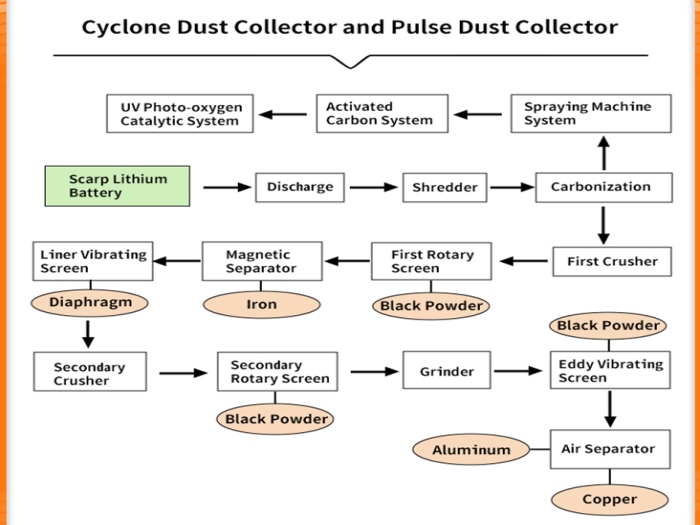 Lithium battery recycling process
For suitable feedstocks and properly configured systems, DOING states that material recovery purity can exceed 98%. Actual recovery results should be confirmed through material testing and a project-specific process design before equipment is ordered.
A machine with a large nominal capacity is not necessarily the right choice for every recycling business. The processing capacity should match the amount and type of battery waste that can be supplied consistently.
When comparing manufacturers, consider:
Available battery waste per day or month
Battery type and physical condition
Required working hours
Desired final products
Available labor
Factory space
Investment budget
DOING lithium battery recycling systems can be configured for different production requirements, with commonly listed capacities ranging from approximately 500 kg/h to 3,000 kg/h.
The capacity should therefore be considered together with the overall plant configuration. A manufacturer that can adjust equipment and process design according to the customer's feedstock and production requirements can provide a more practical solution than simply offering a standard machine.
Safety should be considered from the beginning of the recycling process. Damaged or improperly handled lithium batteries can present fire and thermal hazards, while crushing and separation can also generate dust and gas that need to be properly managed.
Before purchasing a lithium battery recycling machine, buyers should ask how the manufacturer handles battery discharge, pretreatment, crushing, dust collection, and gas generated during processing.
Depending on the feedstock and process requirements, DOING recycling solutions can include spent battery discharge, brine discharge pretreatment, and natural or mechanical drying. Crushing and separation sections can also be designed with explosion-proof measures and dust and gas filtration systems.
Dust collection is particularly important in a mechanical recycling plant. Proper dust and gas management helps maintain a cleaner working environment and supports compliance with applicable environmental requirements.
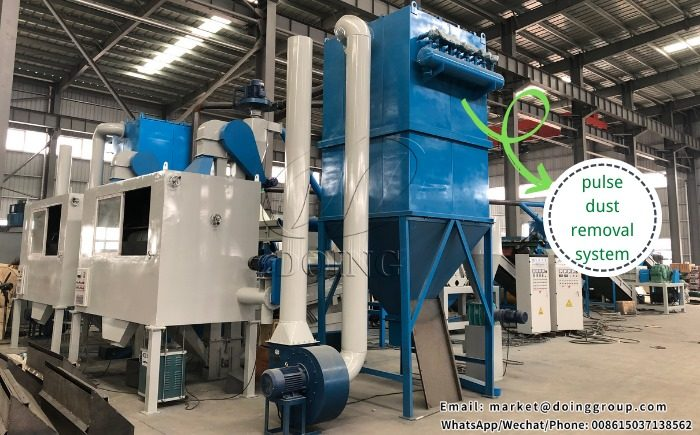 Lithium battery pulse dust removal device
Rather than looking for one “safety feature,” buyers should evaluate how safety and environmental control are incorporated into the complete process.
The initial equipment quotation is only one part of the total investment. For a recycling business, operating costs and material recovery can have a much greater impact on long-term profitability.
A useful comparison should include:
Equipment investment
Processing capacity
Electricity consumption
Labor requirements
Maintenance costs
Material recovery
Final product value
DOING uses automated process control and dry physical separation to reduce unnecessary manual handling and streamline the recycling process. Automation can also help maintain consistent operating conditions while reducing labor requirements.
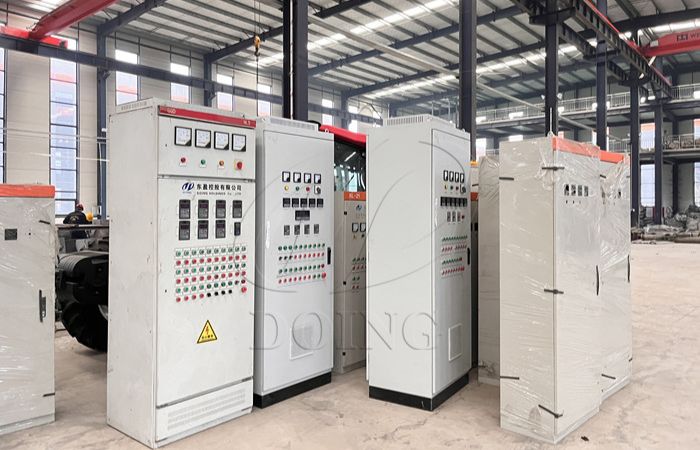 PLC control system for lithium battery recycling equipment
However, the profitability of a lithium battery recycling plant cannot be determined by equipment price alone. Local costs for waste batteries, electricity, labor, transportation, and recovered materials all affect the final result. A reliable manufacturer should therefore assess the customer's actual raw material and business model rather than promise a fixed return.
Setting up a lithium battery recycling plant involves more than purchasing individual machines. Process design, equipment configuration, installation, commissioning, and operator training can all affect the plant's performance after delivery.
When comparing suppliers, ask whether they can support the project from equipment selection and process design through installation and commissioning.
DOING provides turnkey lithium battery recycling solutions, with technical support that can include installation manuals, online technical guidance, on-site construction support, worker training, and equipment warranty services.
For overseas projects, this engineering capability can be particularly important. Buyers should also check whether the manufacturer has experience with international equipment installation and whether technical support remains available after the plant is commissioned.
A manufacturer's claims are easier to evaluate when they are supported by actual projects.
Before placing an order, buyers can ask for:
Completed project photos and videos
Customer application and battery type
Actual processing capacity
Equipment configuration
Installation and commissioning records
Final product samples or test results
Customer feedback
DOING ECO has more than 15 years of export installation experience as of 2026 and has supplied recycling equipment to customers in different international markets. DOING lithium battery recycling solutions are designed for applications involving different types of spent lithium-ion batteries, including EV batteries, consumer batteries, and energy storage battery waste.
DOING ECO has also provided customized lithium battery recycling solutions for clients in countries including India, Pakistan, the United States, the United Arab Emirates, Turkey, Malaysia, the United Kingdom, and Canada.
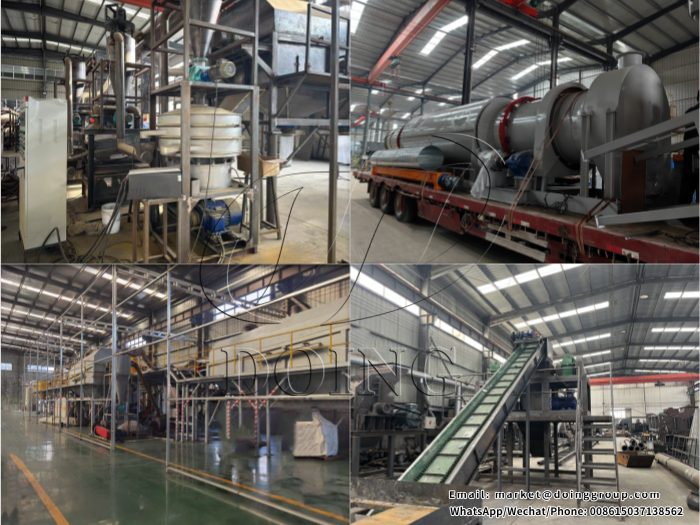 DOING ECO lithium battery recycling solutions
For any specific project, material testing and customized process design are still recommended because battery composition and physical condition can vary considerably between waste streams.
A recycling plant needs to keep running after the equipment has been installed, so technical support should be considered when comparing manufacturers. This is particularly important for overseas projects, where installation, commissioning, operator training, troubleshooting, and spare parts support may all affect how quickly a plant can return to normal operation when an issue occurs.
When evaluating a supplier, look at how its technical support is organized and what assistance is available after delivery, rather than focusing only on the warranty period.
DOING ECO provides technical support throughout the project, from installation and commissioning to operator training and after-sales assistance. Depending on the project, support can include installation manuals, online technical guidance, on-site construction support, troubleshooting, spare parts, and warranty service.
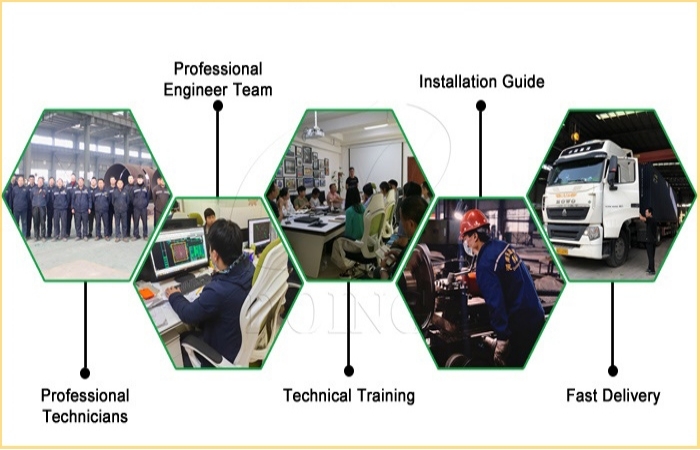 DOING ECO's after-sales service guarantee
For overseas customers, having a clear technical support process can help reduce installation difficulties and unnecessary downtime during long-term operation.
HENAN DOING Supplier Capability Assessment
After comparing different manufacturers against the criteria above, buyers can use the same framework to look at what a specific supplier can actually provide. The following table summarizes the relevant capabilities of DOING and DOING ECO based on their lithium battery recycling solutions and project experience.
| Evaluation area | DOING ECO capability |
| Recycling technology | Dry mechanical processing with multi-stage crushing, screening, magnetic separation, and airflow/gravity sorting |
| Material recovery | Designed to separate copper, aluminum, iron, plastic, and lithium-containing black powder; stated purity can exceed 98% for suitable feedstocks and configurations |
| Processing capacity | Commonly configured from approximately 500 kg/h to 3,000 kg/h |
| Safety & environmental control | Battery discharge and pretreatment options, natural or mechanical drying, explosion-proof measures, and dust/gas filtration depending on process requirements |
| Engineering & turnkey capability | Process design, equipment manufacturing, installation, commissioning, online guidance, and worker training |
| International project experience | More than 15 years of export installation experience, with projects supplied to customers in multiple international markets |
| Technical support | Installation guidance, commissioning support, training, warranty service, troubleshooting, and after-sales technical assistance |
| Customization | Equipment configuration adjusted according to battery type, feedstock condition, capacity, factory space, and target recovered materials |
This comparison also shows why it is useful to evaluate a supplier as a complete solution provider rather than judging a recycling machine by one specification or its purchase price alone.
A lithium battery recycling plant is a long-term investment, and the equipment supplier can influence everything from the initial process design to daily operation after commissioning.
For this reason, the most useful question is not simply “Which manufacturer sells the cheapest machine?” but rather “Which manufacturer can provide a recycling solution that fits my feedstock, capacity, safety requirements, investment level, and long-term operating needs?”
For businesses considering a lithium battery recycling project, DOING ECO can evaluate the available battery waste and project requirements to develop a suitable equipment configuration and recycling solution.
If you are planning a lithium battery recycling plant, you can provide information about your battery type, available feedstock, expected processing capacity, and target recovered materials. The DOING ECO engineering team can use this information to assess the process requirements and recommend a suitable equipment configuration for your project.
 Are There Alternatives to Pyrolysis for Recycling Waste Lithium Batteries?
What's Better for End-of-Life Solar Panels: Mechanical Recycling or Pyrolysis?
How to make charcoal briquettes from agricultural waste?
Why Is It Not Recommended To Mix Different Types Of Lithium Batteries Together For Recycling?
Which countries offer policy support for the solar panel recycling business?
How The EU Battery Regulation Impacts Lithium Battery Recycling Startups?
Are There Alternatives to Pyrolysis for Recycling Waste Lithium Batteries?
What's Better for End-of-Life Solar Panels: Mechanical Recycling or Pyrolysis?
How to make charcoal briquettes from agricultural waste?
Why Is It Not Recommended To Mix Different Types Of Lithium Batteries Together For Recycling?
Which countries offer policy support for the solar panel recycling business?
How The EU Battery Regulation Impacts Lithium Battery Recycling Startups?