
 WhatsApp

DOING ECO
Environmental Protection Equipment Manufacturer

Environmental Protection Equipment Manufacturer
Black mass is an important intermediate product in li ion battery recycling. It is recovered from spent lithium-ion batteries through a series of mechanical processing steps, including shredding, drying, crushing, screening, and material separation. These processes separate valuable electrode materials from battery casings, metal foils, and plastic components. Understanding how black mass is produced helps recycling businesses choose suitable lithium-ion battery recycling machine and improve material recovery.
Black mass is a dark, powder-like material obtained from the positive and negative electrodes of spent lithium-ion batteries. It mainly contains cathode active materials and anode graphite, with a composition that varies depending on battery chemistry.
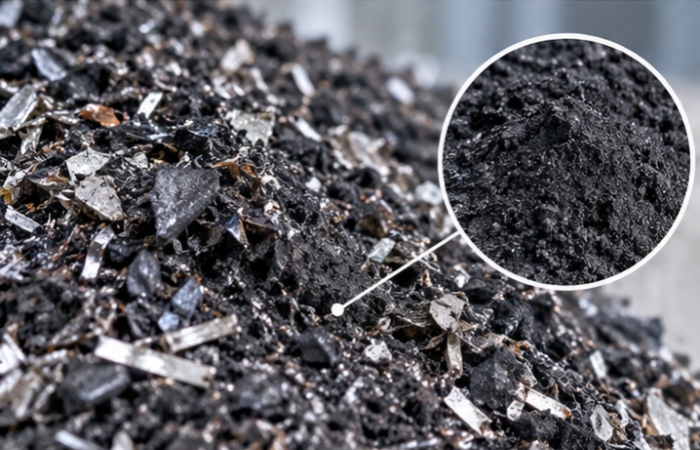 Black mass in li ion battery recycling
For example, NMC battery black mass contains nickel, manganese, and cobalt compounds, while LFP battery black mass mainly contains lithium iron phosphate and graphite.
Black mass is an intermediate product, not a finished material. It requires further processing to recover valuable battery metals.
The following steps describe a dry mechanical processing route for black mass production. Actual process configurations may vary depending on battery types, pre-treatment methods, and electrolyte handling requirements
The black mass production process generally follows several mechanical treatment stages, from battery preparation to final collection:
Spent batteries are first inspected, sorted, and discharged to reduce residual electrical energy and reduce the risk of short circuits, overheating, fires, and explosions during subsequent shredding and crushing. Large battery packs may also need to be dismantled into modules or individual cells to prepare the material for safe mechanical processing.
The prepared batteries enter a shredder for initial size reduction. The machine tears open battery cells and releases their internal components, including electrode materials, copper and aluminum foils, and plastic separators. Nitrogen protection and fire detection measures help reduce risks during shredding.
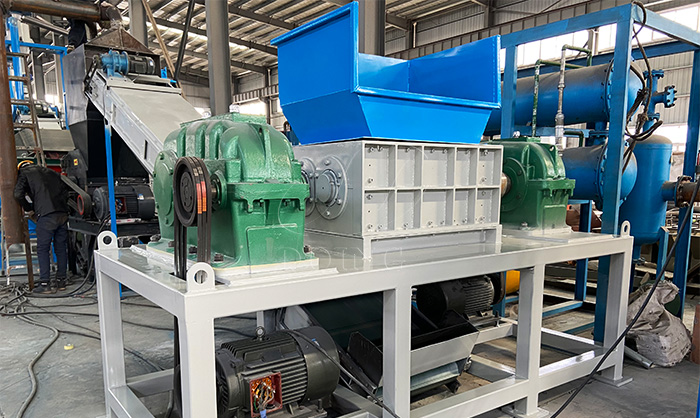 Lithium-ion battery recycling shredder
The shredded material is transferred to a sealed drying system. Controlled heating volatilizes residual electrolyte solvents and reduces moisture, preparing the material for further processing.
The drying exhaust requires proper collection and treatment. A typical system uses a spray tower, condenser, and adsorption unit to treat the exhaust gas before discharge.
After drying, the material enters the crushing stage for further size reduction. Crushing separates electrode coatings from copper and aluminum current collectors, releasing more active materials for recovery. Appropriate particle size is important because incomplete liberation can result in active material loss during subsequent separation.
The crushed material passes through screening equipment, such as drum screens, for particle size classification. Fine electrode particles are separated from larger metal fragments and other components. The fine fraction forms the main black mass stream, while larger particles may require additional processing.
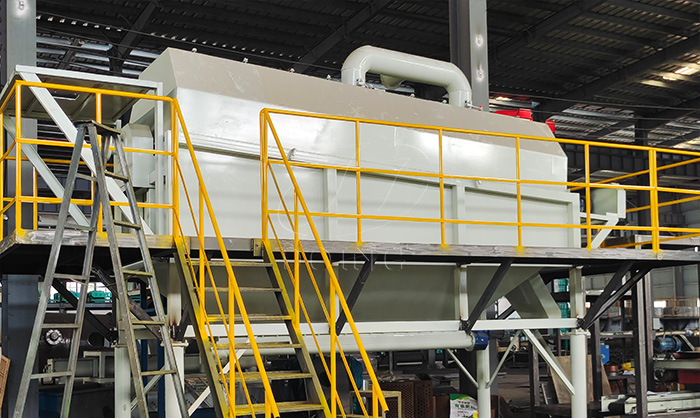 Lithium battery material screening machine
After screening, the material undergoes magnetic and air separation to remove metal impurities and recover valuable metal fractions.
Magnetic Separation: Magnetic separators remove iron and other ferrous metals from the material.
Air Separation: Airflow separates copper and aluminum particles according to their differences in specific gravity, allowing them to be recovered as separate metal fractions.
These processes reduce metal contamination in the recovered black mass, helping improve its purity and recovery efficiency.
The recovered black mass is collected through a conveying system, typically using air conveying and a dedicated collection unit. It can then be packed into bulk bags for storage and transportation or sent for further refining.
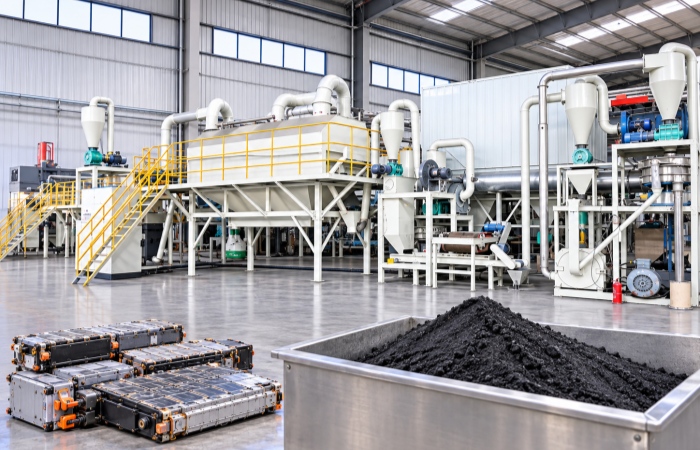 Li-ion battery black mass recycling equipment
Both black mass recovery efficiency and black mass purity depend on the battery feedstock and the performance of each processing stage. Several factors should be considered when evaluating a black mass production line.
Different battery chemistries, including NMC and LFP, have different material compositions. Cell structures, casing materials, and electrode proportions also affect the processing requirements and final black mass composition.
Particle size determines how effectively active materials are released from metal foils. Insufficient crushing may leave electrode coatings attached to current collectors, reducing black mass recovery. Excessive crushing can also increase fine metal contamination.
Insufficient drying may leave residual electrolyte or moisture in the material, affecting subsequent processing and separation. Suitable drying conditions and effective exhaust treatment are essential for stable operation.
Screening and separation determine how effectively black mass is separated from metal and non-metal impurities. Incomplete separation may cause active material loss or contamination in the recovered black mass.
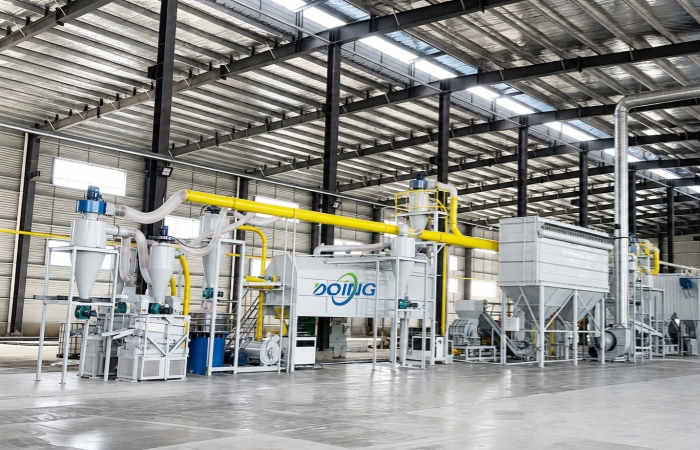 DOING ECO lithium-ion battery recycling machine
To address these challenges, DOING ECO (Henan DOING) incorporates multi-stage crushing and multi-stage physical separation into its lithium-ion battery recycling equipment. Progressive crushing helps release electrode materials from metal foils, while multiple physical separation stages improve the recovery of fine black mass and reduce impurity carryover.
Under stable operating conditions, the black mass recovery rate can reach approximately 92–96%, with copper and aluminum impurities in black mass controlled below 1%. Actual results depend on battery chemistry, feedstock condition, and equipment configuration.
Rated capacity refers to the amount of spent battery material fed into the recycling line per hour, not the final black mass output. Black mass yield varies with battery chemistry and material composition.
Yes. The main equipment can be configured to process both battery types, but operating parameters, including drying temperature and air separation pressure, may need adjustment. NMC and LFP batteries should be processed separately rather than mixed together. The equipment should be cleaned before switching from one battery chemistry to another.
Buyers should provide the battery chemistry, cell type, feedstock condition, expected processing capacity, and target recovery requirements. Representative raw material samples can also help determine the appropriate process configuration before equipment selection.
Looking for a black mass production line? Contact DOING ECO with your battery type and target capacity for a suitable recycling solution.
 What Materials Can Be Recovered from Lithium Battery Recycling?
Is Dry Physical Separation Suitable for Lithium-Ion Battery Recycling?
Are There Alternatives to Pyrolysis for Recycling Waste Lithium Batteries?
What's Better for End-of-Life Solar Panels: Mechanical Recycling or Pyrolysis?
How to make charcoal briquettes from agricultural waste?
Why Is It Not Recommended To Mix Different Types Of Lithium Batteries Together For Recycling?