
 WhatsApp

DOING ECO
Environmental Protection Equipment Manufacturer
Environmental Protection Equipment Manufacturer
Many customers who are new to the biochar industry often ask a similar question: Is biochar the same as activated biochar? And can both be processed by one machine? At first glance, these materials may look similar, but in practice, they serve different purposes and require different processing steps. Understanding the difference is important if you want to choose the right equipment and plan a sustainable project.
Biochar is made by heating biomass such as wood, agricultural waste or coconut shells in an oxygen-limited environment. This process, known as "pyrolysis," converts the raw material into a stable carbonaceous product.
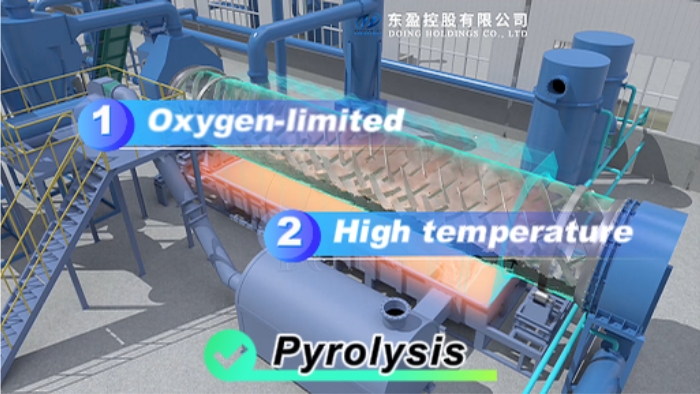 Biochar pyrolysis production process
Biochar retains the carbon structure of biomass, is porous and stable, and is widely used in agriculture, soil improvement, and carbon sequestration. It helps improve soil structure, retain nutrients and promote microbial activity.
Activated biochar (often referred to as activated carbon derived from biomass) is made by further processing biochar under specific conditions. Through physical activation (such as steam or carbon dioxide treatment) or chemical activation (such as the use of alkaline solutions), the surface pores of biochar are enlarged and optimized, thereby significantly improving its adsorption performance.
Because of these properties, activated biochar is commonly used in water treatment, air purification, and industrial adsorption processes.
Compared with ordinary biochar, activated biochar requires more processing steps and requires additional activation equipment or processes to enhance its functionality. In order to understand the difference between the two more intuitively, we compare them through the following table:
| Feature dimension | Biochar | Activated Biochar |
| Process | Biomass pyrolysis(primary processing) | Biochar activation(secondary deep processing) |
| Equipment | Pyrolysis furnace, etc. | Activation furnace, dipping tank, cleaning and drying equipment, etc. |
| Temperature | 300-700°C | 700-1000°C(activation stage) |
| Specific surface area | Lower (usually<100 m²/g) | Very high(up to hundreds to thousands of m²/g) |
| Pore structure | Basic pore structure | Highly developed micropore and mesopore structure |
| Adsorption capacity | Better, suitable for general adsorption | Extremely strong, suitable for deep and selective adsorption |
| Application | Agricultural soil improvement, carbon sequestration, rough water treatment, fuel | Deep water treatment, exhaust gas purification, catalysts, energy storage, medicine |
| Product value | High(base product) | Higher (high value-added products) |
Standard biochar production machine is usually designed for the "carbonization" process and does not have the "activation" function. While such equipment can efficiently convert biomass into biochar, the activation process requires different conditions—such as precisely controlled airflow and additional processing steps.
However, a well-designed production system can integrate these two stages. Instead of a single standalone machine, the process can be integrated into a complete production line where biochar is first produced and then further activated.
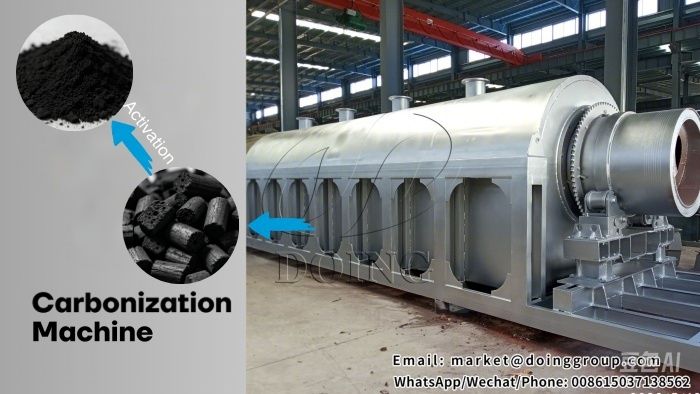 Biochar and activated biochar production processing line
Whether you focus on biochar or activated biochar, professional equipment design plays a vital role. Stable temperature control, consistent material feeding, and efficient gas utilization are all key factors in determining the final product quality.
Henan Doing Company focuses on the R&D and manufacturing of biochar pyrolysis production plant. Our equipment systems are specially designed for the production of high-quality biochar and can be configured as part of a larger production line to support further processing (i.e. activation treatment) when needed.
Specifically, high-quality biochar is obtained through multiple technical designs:
1. High-standard pyrolysis furnace: The reactor and key pipes are made of high-temperature and corrosion-resistant stainless steel, which can effectively resist the erosion of acidic gases generated during the biomass pyrolysis process, ensuring the efficiency and purity of the carbonization reaction, and ensuring long-term stable operation.
2. Fully automatic intelligent control system: Through the PLC intelligent control system, key parameters such as temperature and pressure can be monitored in real time. By precisely controlling the temperature rise curve and residence time during the pyrolysis process, we ensure that each batch of biochar is a 'high-quality' product.
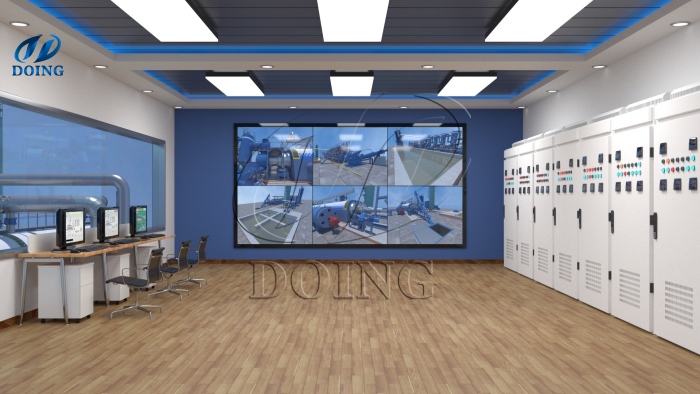 PLC-controlled automated biochar pyrolysis machine
3. Proprietary anti-coking/anti-clogging design: Aiming at the problem that biomass raw materials are prone to coking, we have designed a special anti-coking structure. This not only ensures the heat transfer efficiency under long-term continuous operation and avoids the degradation of biochar quality due to local overheating, but also greatly reduces the cost of equipment shutdown, cleaning and maintenance.
If you are planning a biochar or activated carbon project, it is crucial to work with an experienced equipment supplier. Henan Doing Company is always ready to provide practical solutions and reliable biochar pyrolysis production plant to support your project.
 Are There Alternatives to Pyrolysis for Recycling Waste Lithium Batteries?
What's Better for End-of-Life Solar Panels: Mechanical Recycling or Pyrolysis?
How to make charcoal briquettes from agricultural waste?
Why Is It Not Recommended To Mix Different Types Of Lithium Batteries Together For Recycling?
Which countries offer policy support for the solar panel recycling business?
How The EU Battery Regulation Impacts Lithium Battery Recycling Startups?
Are There Alternatives to Pyrolysis for Recycling Waste Lithium Batteries?
What's Better for End-of-Life Solar Panels: Mechanical Recycling or Pyrolysis?
How to make charcoal briquettes from agricultural waste?
Why Is It Not Recommended To Mix Different Types Of Lithium Batteries Together For Recycling?
Which countries offer policy support for the solar panel recycling business?
How The EU Battery Regulation Impacts Lithium Battery Recycling Startups?