
 WhatsApp

DOING HOLDINGS
Environmental Protection Equipment Manufacturer

Environmental Protection Equipment Manufacturer
As the first batch of photovoltaic power plants enters its decommissioning phase, the recycling of photovoltaic panels has become a crucial link in the circular economy. Waste solar panel components contain recyclable materials such as glass, aluminum, silicon, and various precious metals. Currently, mainstream PV panels recycling technology mainly consists of three stages, utilizing a combination of processes to achieve the resource utilization of solar panel waste.
The first step in photovoltaic panel recycling typically involves automated physical disassembly techniques. Because solar PV modules are tightly encased in aluminum frames, they must first be disassembled. The dismantling process mainly consists of two parts:
Automated frame removal: Using specialized aluminum frame removal machines to quickly separate the aluminum frames, ensuring the purity of the recycled aluminum.
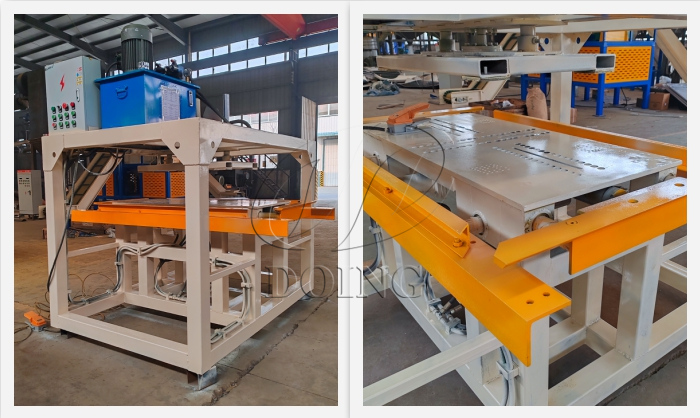 Solar PV panels aluminum frame removal machine
Junction box removal: Using mechanical cutting to separate the junction box on the back, extracting conductive materials such as copper wires.
The aluminum frames of PV panels are highly valuable, but manual disassembly is both time-consuming and labor-intensive. DOING's photovoltaic panel recycling machine uses PLC intelligent control: the semi-automatic models require only 1-2 workers to complete the aluminum frame removal, while the currently fully upgraded automated solar panel recycling production lines feature computer-controlled units, requiring no manual intervention. This significantly reduces labor time, lowers safety risks, and ensures that each aluminum frame is recovered without damage.
This is the most critical step in the PV panel recycling process, as solar glass accounts for a large proportion of solar panels (typically 70%-80%) and has high recycling value. Since the EVA adhesive layer bonds the glass, solar cells, and backsheet together, specific technologies are required to separate them. The DOING solar panel glass removal machine primarily utilizes two core technologies:
Thermal Decomposition Technology: The photovoltaic panel components are placed in a controlled high-temperature environment, causing the EVA layer to soften, effectively separating the tempered glass from the solar cells.
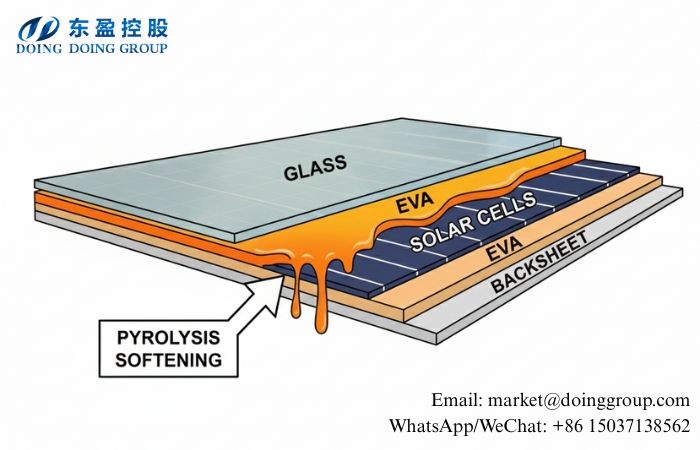 Solar PV panels glass recycling technology
Crushing and Separation Technology: This is a key step in separating the glass from the PV panel. The solar panels are fed into a crusher, where high-speed rotating blades and a robust crushing chamber thoroughly break down the panels, completely separating the glass from the cells, resulting in high-purity glass.
In the PV panels recycling process, solar panel modules are first crushed, and then techniques such as airflow separation and electrostatic separation are used to separate glass, metal particles, and plastic components. DOING's solar PV panel recycling machine utilizes the purely physical process and multi-stage crushing and separation process to achieve efficient recycling of solar panel materials: after removing the aluminum frame and glass, shredding the PV panel into small pieces, then grinding and finally screening and two-stage separation (airflow and electrostatic separation) to separate silicon, copper, and plastic.
This precise PV panel recycling process ensures extremely high recycling rates: over 99% for aluminum frames, and over 95% for glass, silicon, copper, and plastic. The recycled materials also meet the reuse standards of the solar industry—the purity of aluminum, glass, and plastic exceeds 98%, and the purity of copper and silicon powder exceeds 95%. Therefore, these solar panel materials can be directly reintroduced into the manufacturing chain.
Besides, environmental control technology is also key to compliant recycling PV panels. DOING’s solar PV panel recycling machines have fully enclosed systems to trap dust, paired with pulse dust collectors that keep air clean. The physical recycling process produces no water or chemical waste, achieving zero secondary pollution. Operating noise stays below 85 dB, meeting strict industrial zone regulations—so your operation stays on the right side of environmental rules, avoiding fines.
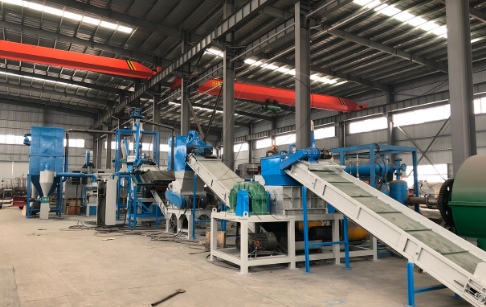
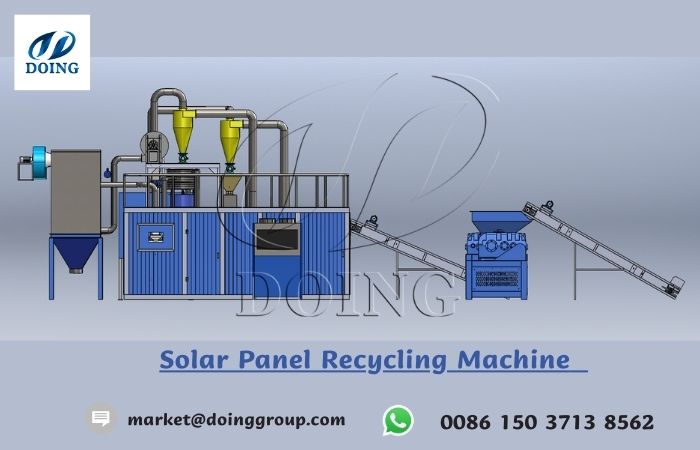 DOING solar PV panel recycling machine
Henan DOING Company, as a professional manufacturer of solar PV panel recycling machine, not only provides these technologies, but also customizes solutions to meet your specific needs. Our solar panel recycling machine offers standard capacities (500 kg/hour and 1000 kg/hour) and can be customized according to your production volume. We also provide full support: from initial consultation and plant design to installation and maintenance, ensuring the smooth operation of your PV panels recycling process.
Ready to build a profitable and green business using these PV panel recycling technologies? Contact us today for professional advice and customized solar panel recycling solutions, and let's work together to transform solar waste into valuable resources.
 Is it Profitable to Produce Charcoal Briquettes in India?
What recycling processes do solar panel glass removal machines use?
Are lithium batteries recyclable in Canada?
How to Meet the Looming Challenges of Solar PV Panel Recycling?
What percentage of lithium batteries are recycled?
How to easily remove aluminum frame and glass of photovoltaic panels?
Is it Profitable to Produce Charcoal Briquettes in India?
What recycling processes do solar panel glass removal machines use?
Are lithium batteries recyclable in Canada?
How to Meet the Looming Challenges of Solar PV Panel Recycling?
What percentage of lithium batteries are recycled?
How to easily remove aluminum frame and glass of photovoltaic panels?