WhatsApp

DOING HOLDINGS
Environmental Protection Equipment Manufacturer

Environmental Protection Equipment Manufacturer
Agricultural waste typically possesses a high moisture content; specifically, freshly harvested crop stalks or fruit husks may contain moisture levels ranging from 30% to 60%. For most agricultural waste, drying pretreatment is required prior to carbonization. This step exerts multifaceted effects on both the operation of the carbonization equipment and its final output:
Excessive moisture within agricultural waste implies that during the heating phase of the carbonization furnace, additional thermal energy must be expended to evaporate this water. This significantly increases the overall energy consumption of the carbonization process, extends the time required for preheating and temperature ramp-up, and consequently diminishes the overall carbonization efficiency of the equipment.
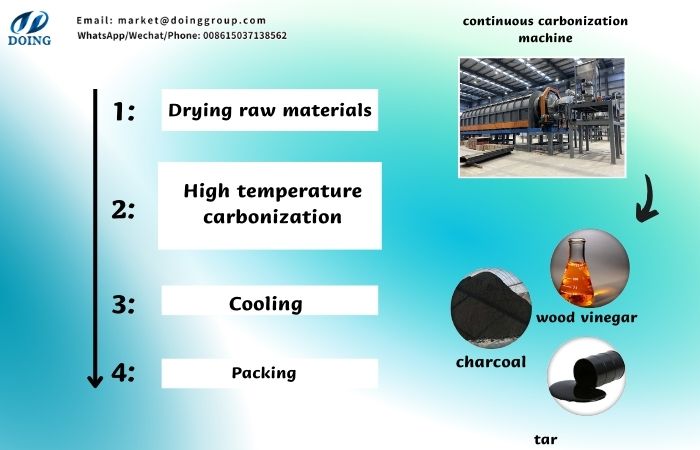 Agricultural waste drying and carbonization process
By pre-drying agricultural waste, unnecessary production costs can be minimized, allowing thermal energy to be focused more effectively on the biomass carbonization reaction.
Moisture content has a direct impact on the ultimate quality of the resulting biochar. A lower moisture level facilitates the thorough completion of the carbonization reaction, yielding biochar with a higher fixed carbon content, lower ash content, and a more uniform porous structure. Such high-quality biochar possesses broader application value in fields such as soil amendment and adsorption-based purification.
Under the high-temperature conditions within carbonization furnace, wet feedstock generates substantial amounts of water vapor. At high temperatures, this water vapor can cause corrosion to the furnace body, piping, and other components; this corrosive effect is particularly intensified when combined with acidic gases produced during the combustion of certain types of biomass. Furthermore, wet feedstock carries a higher risk of clumping inside the furnace and clogging the feed inlet.
Appropriate drying treatment helps minimize the generation of water vapor, thereby protecting the carbonization machine, extending its operational lifespan, and reducing routine maintenance costs.
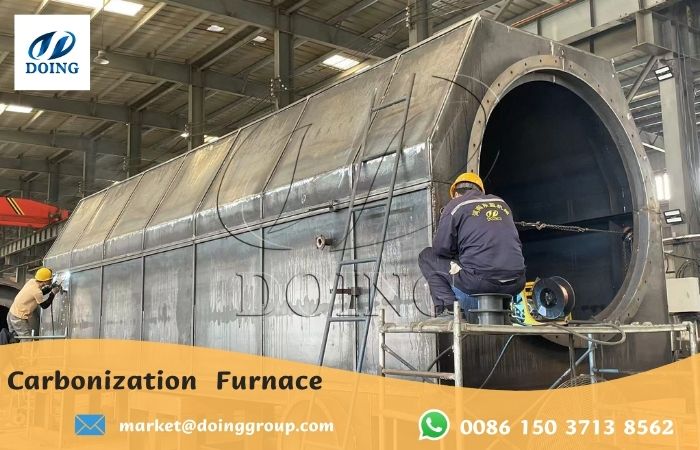 Carbonization machine furnace body
Generally speaking, to ensure optimal carbonization results, it is recommended that the moisture content of biomass feedstock entering the carbonization furnace be controlled within a range of approximately 10% to 15%. This allows for more efficient reactions within the carbonization machine, thereby facilitating high-efficiency carbonization. Therefore, equipping a corresponding drying stage is absolutely essential.
To assist clients in effectively addressing the challenge of high moisture content in agricultural waste, Henan DOING Company’s biomass carbonization machine is designed from the outset with the material's drying requirements fully in mind. Our charcoal production systems can be customized with appropriate drying units, tailored specifically to the actual moisture levels of the client's raw materials.
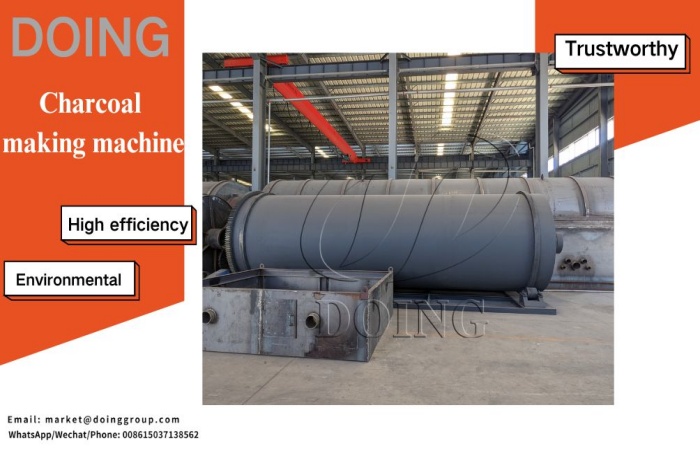 Agricultural waste carbonization dryer
During actual operation, the surplus hot flue gas generated by the main carbonization furnace is efficiently recovered. After undergoing dust removal, this gas is directly channeled to the dryer and pyrolysis furnace to serve as a heat source. This systematic thermal energy recycling design ensures highly efficient heat utilization throughout the carbonization process, thereby helping users significantly reduce the project's energy consumption costs.
Henan DOING Company has long specialized in the R&D and manufacturing of carbonization machine, with our products being widely applied in the field of agricultural waste resource utilization. Whether you need to process straw, rice husks, fruit shells, or other biomass, our technical team can provide comprehensive carbonization process recommendations—including drying solutions—tailored to the unique characteristics of your materials. If you are currently planning an agricultural waste carbonization project, or have any questions regarding drying treatments, we invite you to consult with us.
 What's Better for End-of-Life Solar Panels: Mechanical Recycling or Pyrolysis?
How to make charcoal briquettes from agricultural waste?
Why Is It Not Recommended To Mix Different Types Of Lithium Batteries Together For Recycling?
Which countries offer policy support for the solar panel recycling business?
How The EU Battery Regulation Impacts Lithium Battery Recycling Startups?
What is the most environmentally friendly way to dispose of batteries?
What's Better for End-of-Life Solar Panels: Mechanical Recycling or Pyrolysis?
How to make charcoal briquettes from agricultural waste?
Why Is It Not Recommended To Mix Different Types Of Lithium Batteries Together For Recycling?
Which countries offer policy support for the solar panel recycling business?
How The EU Battery Regulation Impacts Lithium Battery Recycling Startups?
What is the most environmentally friendly way to dispose of batteries?