
 WhatsApp

DOING ECO
Environmental Protection Equipment Manufacturer

Environmental Protection Equipment Manufacturer
As the global solar industry begins to face a significant wave of end-of-life panels, recycling is shifting from a niche concern to a practical business opportunity. However, setting up a recycling plant is not just a matter of having space and equipment. It involves navigating a specific set of qualifications that range from environmental clearances to technical reliability. DOING draws on extensive project experience to help break down these requirements, offering solutions that cover everything from initial planning to full-scale operation.
No matter where the plant is located, the first step is always securing the right environmental permits and waste management certifications. This usually begins with an Environmental Impact Assessment, which is needed to confirm that the selected site and the planned processes meet local ecological standards. In many regions, solar panels are classified under hazardous waste regulations because of the presence of lead or fluorine compounds, which means operators will need a specific hazardous waste handling license. If the business model includes accepting materials from other countries, compliance with international frameworks like the Basel Convention on cross-border waste transport also becomes a mandatory qualification. Meeting these solar panel recycling plant qualifications requires careful planning. DOING supports this stage by providing access to updated regulatory guidance and assisting with the structure of compliance strategies, helping to reduce the legal risks that can stall a project before it even breaks ground.
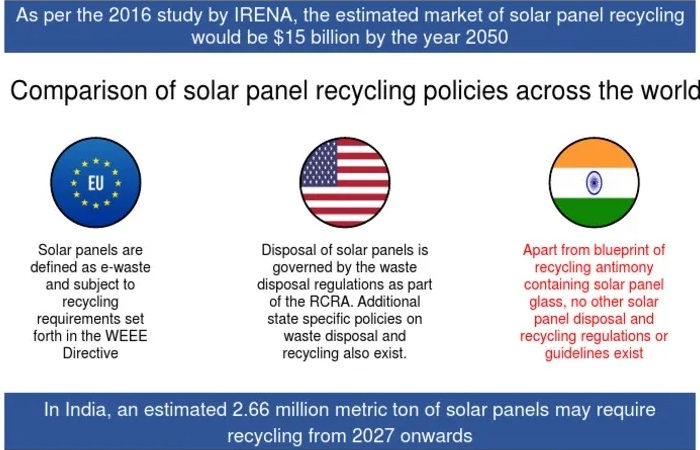 Comparison of solar panel recycling policies across the world
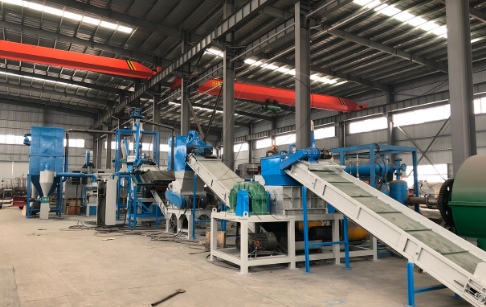
Meeting technical qualifications isn't just about having equipment on site—it's about proving the process can reliably recover usable materials without creating compliance headaches. DOING photovoltaic panel recycling line follows a dry, multi-stage physical process: automated aluminum frame dismantling, shredding, crushing, grinding, and precise sorting. Recovery rates reach over 99% for aluminum frames and above 95% for glass, silicon, copper, and plastic. Material purity is equally practical—aluminum, glass, and plastic exceed 98%, while copper and silicon powder top 95%, meaning the output can feed directly back into manufacturing supply chains. The system operates on PLC control and can run 24/7, with the semi-automatic version needing only one or two workers for frame removal and the fully automatic line requiring no manual intervention. Standard capacities include 500 kg/h and 1,000 kg/h, with customization available to match actual throughput needs. Because the DOING photovoltaic panel recycling line uses no water or chemicals, there's no wastewater or chemical discharge to manage. An enclosed design with pulse dust collection keeps air quality in check and noise under 85 dB, which helps satisfy the environmental and workplace standards typically required during permitting and operation.
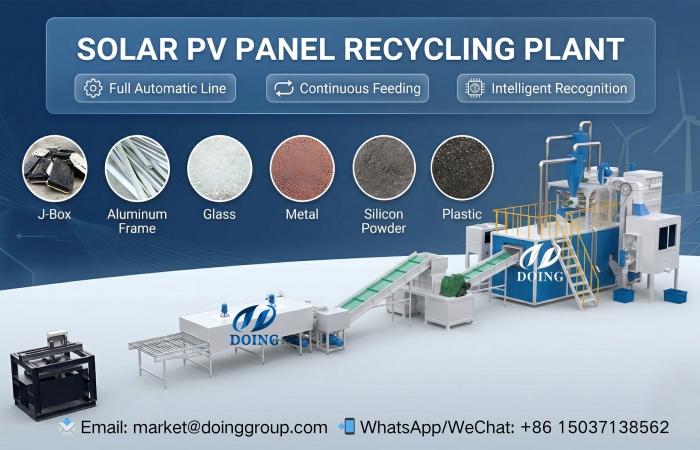 DOING photovoltaic panel recycling line
Even with permits in place and the equipment running, the long-term viability of a solar recycling plant depends on what happens after the panels are processed. Having stable relationships with downstream buyers for the recycled glass, metals, and silicon powder is just as important as the initial setup. Additionally, many corporate partners and investors now expect to see a commitment to structured environmental management, often demonstrated through certifications like ISO 14001. DOING helps address this side of the business by sharing insights into established sales channels. This helps position the plant not just as a waste processor, but as a reliable material supplier.
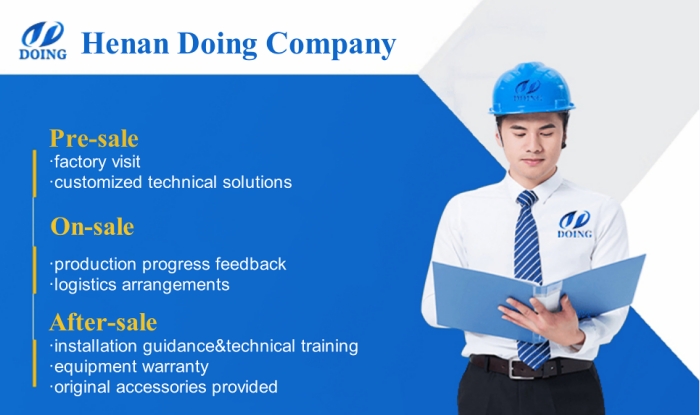 DOING's comprehensive service advantages
Working with DOING provides a consolidated framework that covers both the equipment and the operational know-how needed to navigate the requirements for establishing a solar panel recycling plant. The company’s background in international plant configurations means the DOING photovoltaic panel recycling line is built to align with various regional requirements, including CE standards, without requiring major on-site modifications. Beyond the initial sale, the service includes technical support for qualification applications, installation guidance, and staff training.
If you are planning a solar panel recycling project and need to clarify the specific solar panel recycling plant qualifications or other requirements for
establishing a solar panel recycling plant, we can provide a customized plant configuration plan featuring the DOING photovoltaic panel recycling line. Please feel free to contact us to discuss your requirements in more detail.
 Is Dry Physical Separation Suitable for Lithium-Ion Battery Recycling?
Are There Alternatives to Pyrolysis for Recycling Waste Lithium Batteries?
What's Better for End-of-Life Solar Panels: Mechanical Recycling or Pyrolysis?
How to make charcoal briquettes from agricultural waste?
Why Is It Not Recommended To Mix Different Types Of Lithium Batteries Together For Recycling?
Which countries offer policy support for the solar panel recycling business?
Is Dry Physical Separation Suitable for Lithium-Ion Battery Recycling?
Are There Alternatives to Pyrolysis for Recycling Waste Lithium Batteries?
What's Better for End-of-Life Solar Panels: Mechanical Recycling or Pyrolysis?
How to make charcoal briquettes from agricultural waste?
Why Is It Not Recommended To Mix Different Types Of Lithium Batteries Together For Recycling?
Which countries offer policy support for the solar panel recycling business?